In industrial valve manufacturing, two valves can look nearly identical but be intended for very different purposes. Differences in material grade, pressure rating, size, or specifications can determine where a valve or its components can safely be used.
That is why accurate part identification is important throughout the manufacturing process.
Valve bodies, flanges, stems, discs, and other components may pass through machining, inspection, assembly, testing, storage, and delivery before they are finally put to use. During these stages, relying only on paper labels, stickers, or packaging can cause problems. Labels may become damaged, detached, or difficult to read, increasing the risk of misidentification.
Permanent laser marking on metal gives manufacturers a more reliable way to keep identification directly on the component.
How Can Component Mix-Ups Become a Serious Manufacturing Problem?
Industrial valves are produced for specific applications and operating conditions. Their components may vary in material, size, pressure class, manufacturing batch, or customer requirements.
The problem is that these differences are not always visible just by looking at the parts.
For example, two components may have almost the same shape but be made from different material grades or belong to different production batches. If their identification is lost, workers may have difficulty determining which component belongs to a particular order or assembly.
A mix-up can result in:
- Incorrect components being used in an assembly
- Additional inspection and rework
- Production delays
- Difficulty tracing manufacturing records
- Incorrect parts moving into later stages of production
Clear and permanent identification helps reduce this uncertainty by keeping important information connected to each component as it moves through the manufacturing process.
How Does Permanent Laser Marking Improve Part Identification?
Unlike temporary labels, permanent metal marking places identification directly onto the surface of a component.
Depending on manufacturing requirements, a laser can mark different types of information, including serial numbers, batch or lot numbers, part numbers, material grades, logos, manufacturing codes, and machine-readable identifiers.
This enables workers to identify a component at different stages without relying entirely on separate documents, packaging, or temporary labels.
This can be particularly useful after valve machining or when similar-looking components are stored in the same area. Workers can check the marked information before transferring a component to assembly, inspection, testing, or another production stage.
Since the identification remains physically connected to the component, there is less risk of important identifying information becoming separated from the part it represents.
Supporting Component Traceability During Production
Component traceability goes beyond simply knowing what a part is. It involves maintaining a clear connection between a physical component and its manufacturing information.
At each stage, identification can help connect the component with relevant production and quality records.
A permanent laser-marked serial number or code can provide this connection.
If a problem is discovered during inspection, workers can use the component’s identification to locate relevant batch or production information. Similarly, before assembly, identification can be checked to confirm that the correct component is being used.
This creates a more controlled manufacturing process and reduces reliance on memory, visual appearance, or temporary labels.
QR Code Laser Marking for Faster Identification
As manufacturers increasingly digitize their production records, QR code laser marking can provide a more efficient way to identify and track components.
Instead of fitting a large amount of readable information onto a limited metal surface, a compact QR code can provide a machine-readable identifier. The code can be connected to a manufacturer’s database or internal system, allowing authorized personnel to access information associated with a particular component.
This information may include:
- Part identification details
- Batch or lot numbers
- Inspection records
- Manufacturing data
- Maintenance-related information
One of the key advantages of laser marking QR code identifiers directly onto suitable components is permanence. Unlike a paper label, the identification remains directly on the component and does not need to be separately attached and maintained throughout production.
This can be especially useful in industrial environments where components are handled, moved, inspected, and processed multiple times before final assembly.
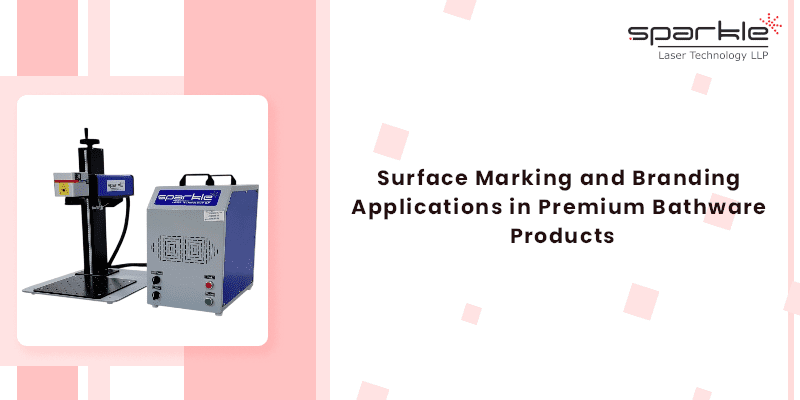
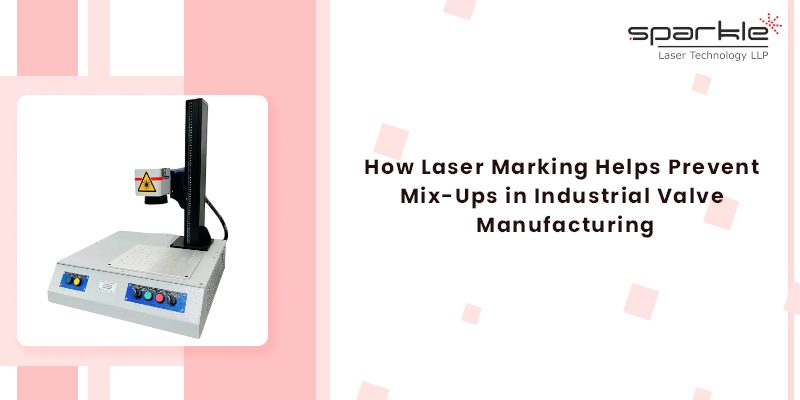
Using the Ozone Laser Marking Machine in Valve Manufacturing
Once a valve manufacturer decides to use permanent identification, there is another practical question to consider: how can each part be marked clearly without relying on labels that may get damaged or separated during production?
This is where the Ozone Laser Marking Machine can be useful.
For suitable metal components, the machine can create permanent identification directly on the surface. This gives manufacturers a practical alternative to relying only on stickers, tags, or labels that remain separate from the actual part.
Depending on the marking requirements, manufacturers can mark details such as:
- Part numbers
- Serial numbers
- Batch or lot numbers
- Manufacturing codes
- Logos and text
- Suitable machine-readable codes
For a valve manufacturer, these marks serve a practical purpose. They give workers a clear way to identify similar components as they move from one stage of production to another.
Why Does Permanent Marking Matter on a Busy Production Floor?
Valve components rarely stay in one place during manufacturing.
A part may go through machining, move to an inspection station, spend time in storage, and later arrive at the assembly area. During all this movement and handling, its identification needs to remain with the correct component.
This can become challenging when temporary labels are the only source of identification. A label may become damaged, difficult to read, or separated from the part it belongs to.
Permanent marking reduces this dependence.
When identifying information is marked directly onto a suitable metal surface, workers have a reference that stays with the component.
This becomes particularly useful when several similar-looking parts are being processed at the same time. Instead of identifying a component only by where it was stored or which packaging it came from, workers can check the information directly on the part.
Creating Clear and Consistent Identification
In a manufacturing environment, identification needs to be more than permanent. It also needs to be consistent.
Consider a production batch containing dozens of similar components. Some information may remain the same across the entire batch, while other details may be unique to individual parts.
A part number, for example, can identify the type of component. A batch or lot number can show which production group it belongs to. A serial number can provide a unique identity for an individual component.
Laser marking provides a controlled way to apply this information to suitable surfaces.
This makes it easier to distinguish components that may look almost identical but have different manufacturing identities or specifications.
Workers no longer have to depend entirely on visual differences between parts. They have clear identifying information available directly on the component.
Using Machine-Readable Codes for Easier Identification
Not every piece of information needs to be written out in full on a component.
Space can be limited, particularly on smaller parts. In these situations, a compact machine-readable identifier may provide a practical alternative.
Where the application and marking setup are suitable, QR code laser marking can create a code that workers can scan using a compatible system.
The code can act as an identifier connected to information stored in the manufacturer’s digital records. Instead of placing a large amount of text directly on the component, workers can scan the identifier to access the information associated with it, depending on how the manufacturer’s system is configured.
This creates a useful connection between a physical component and its digital records.
The Ozone Laser Marking Machine creates the permanent identifier on the component, while the manufacturer’s software and database manage the information associated with that identifier.
Used together, physical identification and digital records can support better component traceability throughout production.
Where Does Laser Marking Fit into the Production Workflow?
The point at which a component is marked matters just as much as the information being marked.
Manufacturers need to choose an appropriate stage based on the material, component, surface condition, and overall production process.
A typical workflow might look like this:
Machining → Laser Marking → Inspection → Storage → Assembly
Once machining is complete and the surface is ready, the required identification can be applied at the appropriate stage. From there, the mark stays with the component as it continues through production.
At inspection, workers can check the identifier before recording information against the component. During storage, the marking can help distinguish between similar-looking parts.
Before assembly, workers can use the identification as another reference to verify that they are handling the intended component. In this way, industrial laser marking machine becomes part of the overall identification process rather than simply being an isolated marking task.
Laser Marking on Metal Components
Industrial valves and their components can be made from different metals and come in a wide range of shapes and sizes. Because of this, marking requirements are not always the same for every application.
Before marking a component, manufacturers need to consider factors such as its material, surface condition, shape, available marking area, and the type of identification required.
For suitable applications, laser marking on metal allows identification to be placed permanently on the component without depending solely on an attached label.
Where the mark is placed also matters.
It needs to remain visible or accessible when identification is required, while avoiding areas where the mark could interfere with the component’s intended function.
The same consideration applies to machine-readable identifiers. If a QR code or similar code is used, it needs to be positioned and marked in a way that supports reliable scanning for the intended application.
There is no single marking setup that automatically suits every valve component. The right approach depends on the actual material, component design, marking requirement, and production environment.
By matching the marking process to the application, manufacturers can use the Ozone Laser Marking Machine as part of a more reliable identification process—helping workers tell similar components apart and reducing opportunities for mix-ups as parts move through production.
Final Thoughts
Preventing mix-ups in industrial valve manufacturing often comes down to one important factor: making sure the right component can be identified at the right time.
Temporary labels may not always be enough when similar-looking parts move through machining, inspection, storage, and assembly. Permanent laser marking allows manufacturers to keep important identification directly on suitable metal components.
Laser marking is more than simply adding numbers or codes to metal. When used effectively, it gives workers a reliable reference throughout production, reduces the chances of confusing similar-looking components, and supports a more organized manufacturing workflow.
Frequently Asked Questions
1. How does laser marking help prevent valve component mix-ups?
Laser marking creates permanent identification directly on suitable components. Part numbers, serial numbers, and batch codes help workers distinguish similar-looking parts as they move through machining, inspection, storage, and assembly.
2. What information can be laser marked on valve components?
Depending on the component, material, and marking requirements, manufacturers can mark part numbers, serial numbers, batch or lot numbers, manufacturing codes, text, logos, and suitable machine-readable codes.
3. Can QR codes be laser marked on metal components?
Yes. QR code laser marking can be used on suitable metal components and applications. A laser-marked QR code provides a machine-readable identifier that can be connected to manufacturing or traceability records through a compatible digital system.
4. How does laser marking support component traceability?
A permanent serial number, part number, or machine-readable code gives a component a clear identifier that can be linked to relevant manufacturing records. This helps maintain a connection between the physical component and its information as it moves through different stages of production.
5. Can the Ozone Laser Marking Machine be used for industrial valve identification?
Yes, the Ozone Laser Marking Machine can be used to create permanent identification on suitable metal components, depending on the material and marking requirements. The appropriate marking setup should be selected based on the specific component, surface, type of mark, and application.