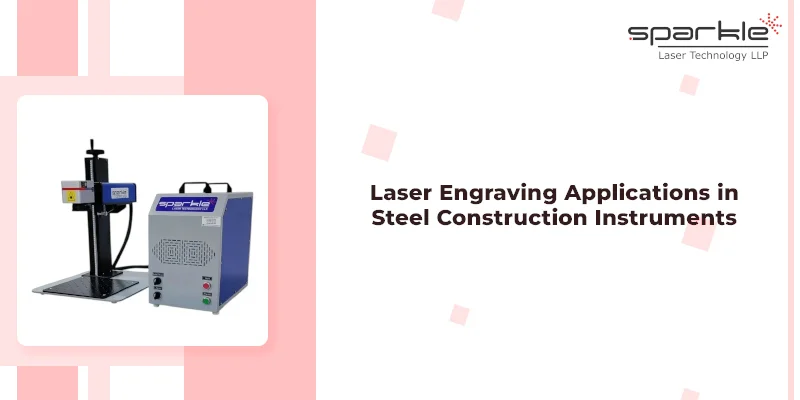
Laser engraving steel construction instruments are used in the workshop, on the construction site, in the fabrication shop and in the factory environment where you need accurate measurement and clear identification. You’ll find steel rules, measuring tools, squares, gauges, marking tools and the like all requiring some form of scale, model number, logo, reference mark or serial number. These need to be legible and in a consistent position so that the tool is actually useful.
This is where a laser engraving machine comes in. You can use it to laser etch numbers, fine lines, symbols, logos and all sorts of other designs directly onto the metal. It’s a fully digital method of marking steel instruments rather than just relying on printed labels or ink markings.
For manufacturers producing construction instruments in a range of sizes and configurations, laser marking can be used for both product identification and functional markings. A suitable fibre laser marking machine can be used to reproduce the same design across a production run, provided that the material and surface finish are appropriate for the process.
Why Do Steel Construction Instruments Need Laser Engraving?
Steel construction tools are going to be handled all the time, will be in contact with other tools, will be in the workshop environment and will be exposed to dust, oil and all sorts of other workshop conditions. The markings on them will tend to get very difficult to read over time if the marking method used is not appropriate for the application.
For measuring instruments, unclear graduations or numbers can make it more difficult to interpret the readings. A missing model number or manufacturer’s logo can also be a problem in terms of being able to identify the product and find the correct specifications.
The appropriateness of the process will depend on the instrument’s purpose, the required depth of marking, the material and the conditions in which the tool is to be used. The aim is to produce clear markings without altering the fundamental dimensions of the instrument or its working surfaces.
Common Applications of Laser Engraving Steel Construction Instruments
1. Engraving Measurement Scales on Steel Rulers
Steel rules and measuring instruments rely on clearly graduated lines and numerals. If the graduations are uneven, the numerals are poorly placed or the markings are hard to read, then the instrument is of little practical value.
Laser engraving steel construction instruments can produce fine lines and numbers on appropriate metal. The design can be prepared digitally so that the measurements are in line with the layout and the markings end up in the correct position.
The accuracy of the finished part is still entirely dependent on correct design dimensions, correct positioning, correct calibration and correct quality inspection. Laser marking in itself does not ensure measurement accuracy.
2. Marking Steel Squares and Angle Measuring Tools
Steel squares, angle gauges and similar instruments may have reference lines, numerical markings, degree indicators and identification details.
A laser engraving machine can mark these elements directly onto appropriate surfaces. The markings establish reference points which make it easier to read the instrument when measuring and laying out work.
Manufacturers must ensure the engraving is correctly positioned and doesn’t interfere with the tool edges, reference surfaces or any other functional areas.
3. Adding Model Numbers and Serial Numbers
Laser engraving steel construction instruments can be available in a number of sizes and configurations. The various models are identified by model numbers, and individual products can be identified by their serial numbers and production codes.
Laser marking enables the manufacturer to change the variable information within a digital design whilst maintaining the same overall layout. This is particularly useful when producing a range of instruments on the same manufacturing line.
4. Engraving Manufacturer Logos
A logo helps to identify the manufacturer and provide a consistent look across the range of products. Laser engraving can be used to produce appropriate logos and lettering directly onto suitable metal.
The end result is dictated by the logo itself, the finish of the metal and the laser parameters that you choose. You’ll need to test any fine lines and small lettering prior to production to make sure that the final mark is legible.
5. Marking Reference Information on Metal Tools
Somelaser engraving steel construction instruments will require reference numbers, product codes, batch numbers and other identification details. The presence of such information will help the user to differentiate between instruments and will assist the manufacturer in their production records.
The layout should ensure readability. Very small type or characters that are too close together could become hard to read, particularly on a narrow or curved surface.
How a Laser Engraving Machine Works on Steel?
A laser engraving machine works by directing a focused beam of light onto the surface of a material. The effect will be to remove material or alter the surface to produce a visible mark, the exact nature of which will depend upon the metal being used, the type of laser and the operating parameters.
For steel, the outcome depends on the alloy, the surface condition, the design of the marking and the required contrast. A surface mark may be all that is required for a product logo, whereas in some cases a more deeply engraved mark will be the appropriate solution to achieve the required result.
This digital workflow enables the manufacturer to reproduce measurement lines, text, symbols and logos in the same position. Accurate fixtures, appropriate settings and inspection are still vital, especially where the instrument has measurement scales or reference marks.
Benefits of a Fibre Laser Marking Machine for Steel Instruments
A fibre laser marking machine is suitable for a number of metal identification and engraving applications and can be used to mark compatible steel with fine text, numbers, symbols and graphics.
One benefit is that laser marking is a non-contact process and does not require a physical engraving tool to be in contact with the workpiece. This can help to reduce marking tool wear and can support repeatable designs if the system is set up correctly.
The end result is application- and machine-specific. The manufacturer should assess marking speed, required depth, contrast, working area and the size and shape of the instruments prior to selecting a system.
Suitable Materials and Surface Finishes
Laser engraving steel construction instruments can use different grades of steel and different surface finishes. Stainless steel and alloy steel, for instance, can react in different ways to laser energy depending on their particular composition and surface condition.
Polished, brushed, coated and uncoated surfaces will all give rise to different marking appearances. Prior to production, it is advisable to look at the actual material and determine what settings will give the required level of readability and finish.
Testing is vital when marking measurement scales, as the width and position of the lines need to be consistent. The process has to be controlled so that the markings do not affect the dimensions of the instrument or its intended use.
The Role of the Opto Fiber Laser Marking Machine
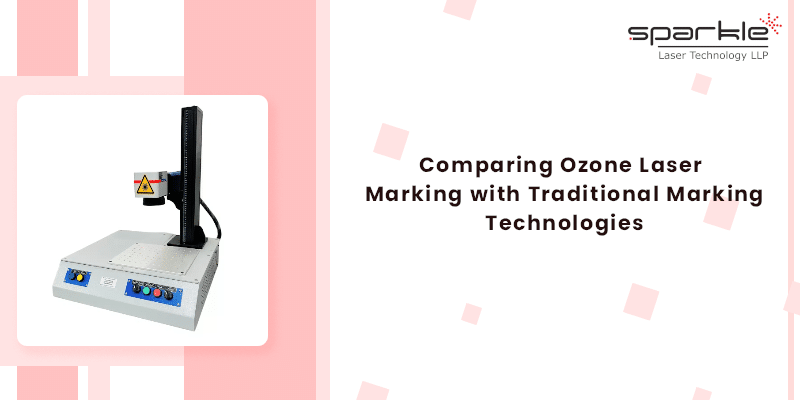
The Opto Fiber Laser Marking Machine is for use on compatible metals and some plastics. The product information lists stainless steel, aluminium, titanium, alloy steel, bronze and copper as materials it can be used on. Capabilities include surface marking, engraving, texturing and circumferential marking of suitable round parts. It can mark a range of graphic and image formats, including SVG, DXF, DWG, BMP, JPEG and PNG.
The machine’s suitability for a particular laser engraving steel construction instruments should be assessed in terms of its size, the material it’s made from, the required depth of marking and the volume of production. Where measurement scales are used, the design and final markings must be checked carefully rather than relying on the laser process alone.
Maintaining Consistent Engraving Quality
When producing laser engraving steel construction instruments in batches, you need to make sure that the markings are consistent from piece to piece. Any variation in line weight, character size, alignment or contrast will affect readability and the finished look of the product.
The digital artwork should be checked prior to production, especially where it includes scale information, small numbers or detailed logos. The instrument itself must be correctly positioned so that the laser follows the required layout. For additional technical guidance on material suitability and marking locations, consult laser marking and engraving process requirements.
Useful quality checks include:
- Check that all the numbers, symbols and reference marks are correct.
- Confirm that logos and model numbers are in the correct positions.
- Inspect line clarity, contrast and character spacing.
- Test representative instruments before processing the larger batch.
- Ensure that marking doesn’t interfere with the tool’s functional surfaces.
These checks help identify problems before a large batch is processed.
Laser Engraving Compared with Conventional Marking Methods
Manufacturers can identify steel instruments by printing, labelling, mechanical engraving or laser marking. Each of these methods has its own characteristics, and the choice of method will be dictated by the instrument’s application and operating environment.
| Comparison factor | Laser engraving | Printing or labels | Mechanical engraving |
| Marking method | Uses a focused laser beam | Applies ink or a separate label | Uses a physical cutting tool |
| Design flexibility | Supports digitally prepared designs | Depends on the printing or label process | Depends on the tooling and setup |
| Variable information | Can change between designs digitally | Can be updated through the printing process | May require setup adjustments |
| Surface contact | Non-contact marking process | Depends on the method | Physical contact with the workpiece |
| Final appearance | Depends on material and laser settings | Depends on ink, label and surface | Depends on the tool and cutting process |
Laser engraving steel construction instruments is useful when detailed markings need to be placed directly onto compatible metal. The result in terms of durability and appearance depends on the material, settings, surface treatment and conditions of use. Laser marking is also used for product identification and traceability in other industrial applications, including laser marking applications for metal parts.
Choosing the Right Laser Marking Setup
Before selecting a marking system, you need to establish which laser engraving steel construction instruments will be processed and what information is required on each product.
The material, surface finish, instrument dimensions, marking area, required contrast and production quantity all need to be taken into account. A setup suited to marking a flat steel plate may require modification when marking a narrow measuring tool or a curved part.
Sample testing gives you the opportunity to check marking quality prior to full production. It also allows you to establish the right settings and verify that the result meets the instrument’s requirements.
Final Thoughts
Laser engraving steel construction instruments is a practical way of putting scales, reference lines, model numbers, logos and other details on compatible steel construction instruments. You can produce a consistent set of markings and tailor the layout to suit different products.
A suitable fibre laser marking machine can be used for these applications if its capabilities are appropriate for the material, size and required mark quality. The Opto Fiber Laser Marking Machine has listed functions for marking compatible metals and certain other materials, making it an option to consider for appropriate instrument-marking applications.
FAQs
1. What is a laser engraving machine steel construction instruments used for?
It can create measurement lines, numbers, logos, model numbers, serial numbers and other identification details on compatible metal.
2. Can a steel engraving machine mark stainless steel instruments?
Yes, suitable laser marking systems can mark stainless steel, with the outcome depending on the material, surface finish and settings used.
3. Is a fibre laser marking machine appropriate for measurement scales?
It can be used to mark scales on compatible instruments. The design dimensions, line positions and final markings must all be checked to ensure the instrument meets its accuracy requirements.
4. What is the difference between a metal engraving machine and a fibre laser marking machine?
A metal engraving machine is a broad term which can cover a number of different marking technologies. A fibre laser marking machine uses a fibre laser source to mark suitable materials.
5. Can laser marking be used to apply logos and serial numbers to steel tools?
Yes. Suitable laser marking systems can mark logos, serial numbers, model numbers and other digital designs onto steel.
6. What should manufacturers check before laser marking steel instruments?
They should check material compatibility, surface finish, design accuracy, instrument positioning, marking contrast and the quality of the finished article before starting full-scale production.