A number of processes are typically needed to create a component in metal fabrication. Various components may need to be cut into shape, cleaned to remove rust and other impurities, and then welded to another component. Traditionally, these operations may require separate machines and workstations.
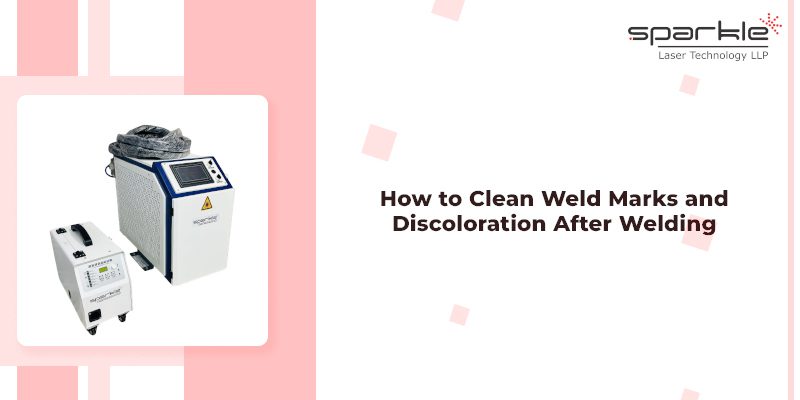
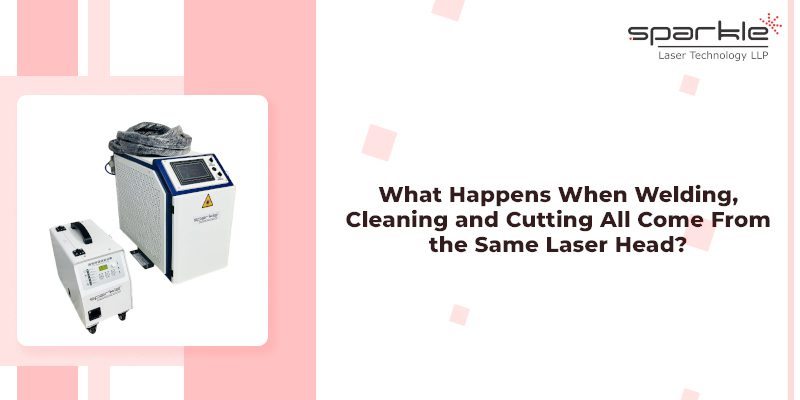
The 5-in-1 fiber laser welding, cleaning and cutting machine combines a variety of processes into one integrated system. Depending on the machine setup, the operator can change the appropriate settings and configuration to switch between welding, cleaning, cutting, weld seam cleaning, and battery welding modes.
This provides greater flexibility for workshops and manufacturers handling various metal-processing activities.
What Is a 5-in-1 Laser Machine?
A 5-in-1 laser machine combines five functions in one machine: laser welding, laser cleaning, laser cutting, weld seam cleaning, and battery welding.
Laser energy is used differently for each function. Laser welding uses concentrated energy to form a controlled melt pool for joining metal components. Laser cleaning uses controlled laser energy to remove unwanted surface contaminants such as rust, paint, oxides, grease, and scale. Laser cutting uses laser energy along a specific cutting path to separate the required metal part.
Weld seam cleaning is used to clean suitable heat tint, oxidation, blackening, and discoloration around the weld area. Battery welding is suitable for battery components, energy storage systems, and EV battery production applications.
For this reason, the machine may operate with different parameters and configurations depending on the selected function.Laser-based material processing can support several operations, including cutting, welding, and surface treatment, depending on the system configuration and application.
How Can One Laser System Be Used for Five Functions?
The general idea is that the laser source can be used for different metal-processing operations through different operating modes.
The optical system transfers the laser beam to the workpiece, while the application and focusing method of the beam can vary according to the operation. For welding, the focused energy creates the heat required to join metal. For cleaning, the laser interacts with the surface in a controlled manner to remove unwanted material. For cutting, the energy is focused along a cutting path.
Depending on the application, the operator may modify the laser power, frequency, focus, scanning pattern, nozzle, protective lens, assist gas, and other parameters.
This enables multiple processes to be carried out on one laser platform instead of using a different machine for each process.
Can the Same Laser Head Perform All 5 Functions?
This depends on the machine configuration. The Sparkle Laser 5-in-1 machine is equipped with an intelligent double-pendulum handheld laser head that can be switched between welding, cutting, cleaning, weld seam cleaning, and battery welding functions.
This does not necessarily mean that the same nozzle or processing setting is used for every function. Different operations may require different settings or components. For example, an appropriate cutting nozzle is used for the cutting function.
The key benefit is that all five capabilities are consolidated into one multifunctional handheld laser system.
Laser Welding
Laser welding is a process that joins two metal pieces using concentrated laser energy to create a controlled melt pool. With proper setup, the process can produce quality welds with controlled heat input.
Depending on the machine configuration, materials such as stainless steel, carbon steel, aluminum, and other compatible metals can be processed.
The welding function can be used in sheet-metal fabrication, metal frames, cabinets and enclosures, kitchen equipment, industrial parts, automotive applications, and repair work.
The actual welding capacity depends on the material, thickness, joint design, laser power, and selected parameters.
Laser Cleaning
Rust, paint, oxides, grease, scale, and other surface contaminants can be present on metal surfaces and may affect subsequent fabrication processes.
Laser cleaning is a non-contact approach to removing suitable unwanted surface layers. The integrated machine can be used to prepare a metal surface before welding or clean a fabricated component after processing.
Common uses include rust removal, paint removal, oxide removal, surface preparation, scale removal, and suitable welding-area preparation. The required settings depend on the material and the contaminant being removed.
Laser Cutting
The cutting function is used to cut suitable metal along a defined cutting path using concentrated laser energy. A suitable nozzle and assist-gas setup can be used to support the cutting process.
Actual cutting performance is influenced by laser power, material type, material thickness, cutting speed, nozzle design, assist gas, laser focus position, and machine configuration.
This allows workshops to cut suitable metal components and then use the same machine for additional fabrication processes.
Weld Seam Cleaning
Beyond the traditional functions of welding, cleaning, and cutting, weld seam cleaning is another function that extends the capabilities of the machine.
After welding, the weld area may show heat tint, oxidation, blackening, or discoloration. The weld seam cleaning function can be used to clean the appropriate area and improve its appearance.
This can minimize additional manual finishing requirements in suitable applications and provide a more consistent finishing process.
Battery Welding
The 5-in-1 system also supports battery welding. It is intended for applications such as lithium-ion batteries, energy storage systems, and EV battery production.
The battery welding function can be used for applications including battery tab welding, busbar welding, battery cap welding, shell sealing welding, and injection port welding.
This provides the machine with applications beyond standard metal fabrication and makes it relevant to battery and energy-storage manufacturing.
What Is a Real Fabrication Workflow?
The benefits become more apparent when several processes are involved in the same project.
For example, if a stainless-steel enclosure is being manufactured, its metal components may first need to be cut to the appropriate sizes. The surfaces can then be cleaned before assembly, followed by welding. After welding, the weld area can be cleaned to achieve a better appearance.
These stages can be integrated through a suitable 5-in-1 system. This can minimize the need to transfer the workpiece between different machines.
The process can therefore move from cutting to cleaning, welding, and weld seam cleaning depending on the requirements of the project.
Why Are Five Functions Combined?
The primary benefit of combining several functions into one system is flexibility. A workshop can use the same machine for various applications instead of purchasing separate laser systems for welding, cutting, and cleaning.
The primary benefits are:
- Reduced equipment requirements
- Improved use of workshop space
- Greater processing flexibility
- Less movement of workpieces
- Fewer separate systems
- Simplified workflow
This can be helpful for custom fabrication, maintenance, repair work, and small production runs where the required process may change from one job to another.
Materials and Applications
The materials that can be processed depend on the machine configuration, application, and laser power. Suitable materials can include stainless steel, carbon steel, aluminum, brass, copper, galvanized steel, and other compatible industrial metals.
| Application | Possible Function |
| Sheet-metal fabrication | Cutting and welding |
| Automotive manufacturing | Welding, cutting and cleaning |
| Electrical enclosures | Cutting and welding |
| Kitchen equipment | Welding, cleaning and cutting |
| Machinery production | Welding, cutting and cleaning |
| Custom fabrication | Welding, cleaning and cutting |
| Battery manufacturing | Battery welding |
| Energy storage | Battery welding |
The actual results vary according to material type, thickness, machine setup, and selected parameters. Representative material testing should therefore be performed before regular production.
How Many Watts of Laser Power Are Needed?
Power requirements depend on the intended use of the laser. Different power levels may be required for welding or cutting thicker materials than for cleaning or weld seam finishing.
Machines should be selected according to the material type, material thickness, production volume, processing speed, and the functions that will be used most frequently.
More power does not necessarily mean better performance for every application. The system should be selected according to the actual requirements of the workshop.
One Machine Versus Individual Machines
| Feature | 5-in-1 Laser System | Separate Machines |
| Welding | Integrated | Dedicated equipment |
| Cleaning | Integrated | Dedicated equipment |
| Cutting | Integrated | Dedicated equipment |
| Weld seam cleaning | Integrated | Additional equipment |
| Battery welding | Integrated | Additional equipment |
| Space requirement | Generally lower | Generally higher |
| Flexibility | High | Depends on equipment |
For workshops that need multiple functions and want to reduce the number of separate machines, a 5-in-1 system can be an attractive option. However, businesses with highly specialized, high-volume operations may still find dedicated equipment more suitable for their particular requirements.
Selecting the Right 5-in-1 Laser Machine
Each of the five functions should be considered when choosing a machine for production. Manufacturers should assess the materials and surfaces requiring welding and cleaning, the materials and thicknesses to be cut, the required weld finishing, and battery-welding requirements.
Other factors to consider include laser power, material compatibility, material thickness, head configuration, nozzle options, cooling system, assist-gas requirements, production volume, maintenance, and technical assistance.
Representative testing before regular production can also help determine whether the selected machine is capable of delivering the desired results.
Safety and Maintenance
A laser system that performs five functions combines laser processing with metalworking applications, so proper safety precautions are essential.
Laser safety, protective equipment, electrical connections, cooling, ventilation, assist gas, protective lenses, and nozzle or configuration changes should all be handled according to the manufacturer’s instructions.
Depending on the system, regular maintenance may include checking protective lenses, optical components, nozzles, the cooling system, fiber connections, gas connections, and welding accessories.
Following correct operating and maintenance procedures helps maintain consistent performance across the different functions.
Conclusion
Combining welding, cutting, cleaning, weld seam cleaning, and battery welding within a single laser system allows multiple stages of metal fabrication to be carried out through one integrated platform.
The 5-in-1 fiber laser system uses a common laser platform while varying the parameters and configurations according to the selected function.
Its main benefit is flexibility. Workshops can use fewer machines, make more effective use of available space, limit workpiece handling, and use the same machine for various metal-processing operations.
However, manufacturers should choose the machine based on their actual requirements. Material type, thickness, laser power, production volume, welding requirements, cleaning requirements, cutting requirements, and machine configuration should all be considered.
For workshops that frequently require several metal-processing capabilities, a 5-in-1 fiber laser system can offer a practical solution for integrating welding, cutting, cleaning, weld seam cleaning, and battery welding capabilities into a single platform.
Frequently Asked Questions
1. What does a 5-in-1 laser machine mean?
A 5-in-1 laser machine is an integrated system that can perform five processes: laser welding, laser cutting, laser cleaning, weld seam cleaning, and battery welding.
2. Is it possible to use one laser machine to weld, clean, and cut metal?
Yes. A suitable 5-in-1 system can perform welding, cleaning, cutting, weld seam cleaning, and battery welding through a single integrated platform.
3. Does the same laser head perform all five functions?
The Sparkle Laser system features an intelligent double-pendulum handheld laser head with quick switching between the five functions. Different settings or configurations may still be required for individual operations.
4. Are there restrictions on which metals a 5-in-1 laser machine can be used for?
The suitable material can range from stainless steel and carbon steel to aluminum, brass, copper, galvanized steel, and other compatible industrial metals, depending on the machine configuration.
5. Can laser cleaning be performed before welding?
Yes. Laser cleaning can be used to remove suitable surface contaminants before welding and assist with metal surface preparation.
6. Is it possible to clean the weld after welding?
Yes. The weld seam cleaning function can be used to clean suitable heat tint, oxidation, blackening, and discoloration around the weld area.
7. Is it possible to weld batteries with the machine?
Yes. The battery welding function is intended for applications involving lithium-ion batteries, energy storage systems, and EV battery production.