Most of the present-day jewellery is produced using laser technology. Today, a lot of jewellery is manufactured with laser technology, which is where laser hallmarking plays a role.
Today’s jewelry production process is revolving around precision. Whether it’s an engagement ring with complex designs, a lightweight bangle, a custom pendant or an upscale bracelet, each of these items needs to be made with exceptional craftsmanship and adhere to quality standards. Today’s customers want jewellery to be not only gorgeous, but to be easy to identify and permanently authenticated in a clear and permanent way.
Jewellery designs have become lighter and more intricate which poses greater challenges to jewellery manufacturers in achieving accuracy throughout the hallmarking process. Where delicate surfaces are concerned, things can only be done so right, and a mere misalignment can make the difference in the appearance of the finished product. Precision is one of the most important considerations when it comes to producing modern jewellery, as traditional hallmarking techniques can sometimes fail to provide consistent results with intricate designs.
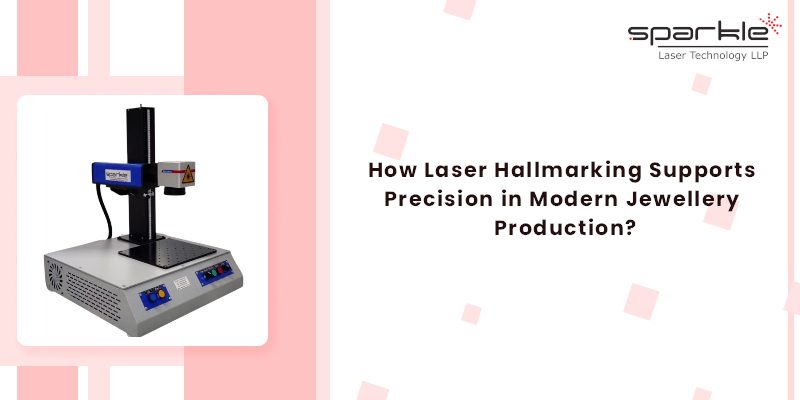
Laser hallmarking has become one of the advanced options that enables manufacturers to make permanent and accurate markings on precious metals without affecting the finish or quality of the metals. It combines the digital precision with non-contact marking, thereby assisting jewellery manufacturers to achieve consistency and aid the identification of jewellery, readability of hallmark and production quality.
Why Accuracy Is Critical in Modern Jewellery Manufacturing?
In today’s precise jewellery industry, accuracy is of paramount importance. In modern jewellery manufacturing, precision is very important.
Precision is the key that affects each step of jewellery creation. If the hallmark cannot be clearly seen, is misplaced, or differs from the ring or pendant, then the ring or pendant will lose its premium status. Manufacturers will therefore put a lot of effort into making sure each marking is consistent with the overall design and not being detrimental to it.
Precision is even more critical when using:
- Lightweight jewellery
- Designer collections
- Customized jewellery
- Delicate rings
- Fine pendants
- Earrings
- Bracelets
The demand of customers is ever increasing, with manufacturers needing to be able to add permanent identification as well as intricately work their designs.
Problems with the Traditional Hallmarking Methods
Hallmarking has been used by the jewellery industry for many years, but has a number of problems with contemporary designs.
Mechanical stamping is done by pressing the surface of the jewellery. It is good for certain items, but can cause inconsistencies in lighter or very intricate items. Readability may suffer if there are slight alignment errors, and multiple manual operations may cause an inconsistent product.
Common challenges include:
- Uneven hallmark placement
- Inconsistent mark quality
- It is hard to wear intricate jewellery. Complex jewelry to wear.
- Additional manual adjustments
- Rework due to inaccurate positioning
- Reduced production consistency
With the growing complexity of jewellery collections, manufacturers are seeking technologies that are able to break these limitations whilst offering production efficiency.
Why Laser Hallmarking Is an Advantage for Precision?
Laser hallmarking is a digitally controlled process that makes permanent marks with the highest possible accuracy on the surface of jewellery. The process is non-contact which means no physical pressure is applied to jewellery in marking.
This enables manufacturers to make clear, lasting hallmarks without altering the look of the jewellery piece. All marks are clearly positioned and easily read, which facilitates manufacturers to maintain quality control for small and large-scale production volumes.
Laser hallmarking is applied in a number of the following scenarios:
- Hallmark identification
- Product identification
- Brand logos
- Serial numbers
- Custom text
- QR codes
- Personalization
The marking process is also digitally controlled, which also makes it more repeatable and ensures that there is a greater level of accuracy in the production, even for delicate jewellery designs.
Supporting Product Identification and Jewellery Authenticity
Jewellery making is more than just a craft. All products must be reliably identified to allow for the manufacturer, retailer and consumer to be assured of product authenticity throughout the product’s lifecycle.
Permanent hallmarking supports:
- Product identification
- Jewellery authenticity
- Brand identity
- Manufacturing traceability
- Customer confidence
- Quality assurance
Good identification also makes it easier to manage inventory, verify products and provide after-sales service and helps manufacturers ensure uniform quality in their collections.
With the demand for high quality jewellery growing, permanent hallmarking has become a core element in fostering customer confidence in jewellery manufacturers.
Precision Across Different Jewellery Designs
The hallmarking process has to maintain the same level of accuracy as jewellery designs get increasingly complicated, without compromising the beauty or craftsmanship of the final product.
Each piece of jewellery has its own set of hallmarks problem. The rings provide little room for marking and pendants may have decorative patterns which should not be modified. In case of bracelets, earrings and bangles, it’s essential to position it carefully so that it doesn’t obscure the design. This consistent performance in all of these types of jewellery only comes from a very accurate marking process.
Laser hallmarking helps in achieving this degree of accuracy by leaving a permanent and highly legible mark on the jewellery surface without any physical pressure. The whole process is digitally controlled, which means that manufacturers are able to ensure the same “hallmark” placement for various products, even if they are complex and have different shapes. This helps to ensure the production consistency and keeps the original finish of the jewellery.
Laser hallmarking is typically used for:
- Gold rings
- Wedding bands
- Lightweight bangles
- Pendants
- Earrings
- Bracelets
- Chains
- Customized jewellery
- Designer jewellery
- Luxury jewellery collections
With customer demands evolving towards lightweight and custom-made jewellery, it is increasingly more critical for today’s manufacturers to ensure precision across various product categories.
How Laser Hallmarking Improves Manufacturing Efficiency?
In the jewellery industry, manufacturing efficiency now plays a significant role in competition. Deliver faster, more customizable products and consistently high quality. For this to be fulfilled, manufacturers need to minimize production time and ensure the precision of all manufacturing activities.
The traditional hallmarking process is time consuming and involves manually positioning, readjusting and re-inspecting the product before it is ready for delivery. If any hallmark is not understood or is misplaced, it could mean that the manufacturer would have to start the process again or rework the jewellery, which adds to the production time and the cost of materials.
Laser hallmarking can make these tasks easier by ensuring that your mark is consistent and repeatable for each production batch. The digitally controlled process reduces the amount of manual work and ensures all hallmarks are set correctly. This helps to minimize production mistakes and boost workflow efficiency during the manufacturing process.
The increased precision also makes it quicker to inspect all of the hallmarks, since they are all made with the same clarity and positioning. Manufacturers can spend less time on individual product inspection and production teams can keep up with production while maintaining quality.
As production volumes grow, laser hallmarking makes it easy for manufacturers to work more efficiently, reject fewer pieces, avoid material wastage and ensure that the product quality is uniform in each jewellery collection.
Permanent Hallmarking The Boost to Brand Value
When it comes to fine jewellery, customers are buying more than just gold and silver. They look for authenticity, workmanship and assurance that products conform to accepted standards of quality. A professionally applied clear and new hallmark will further build this confidence through the establishment of a permanent identification, which embodies the manufacturer’s quality commitment.
Permanent hallmarking also helps in brand recognition. Customers become accustomed to the clear, durable and professionally placed hallmarks on their jewellery and start to equate the quality of the hallmarks to the manufacturer’s brand. This builds trust and loyalty among customers, leading to repeat sales over time.
Permanent hallmarking also benefits the manufacturers by facilitating:
- Better product identification
- Improved manufacturing traceability
- Stronger brand identity
- Simplified inventory management
- Easier product verification
- Better after-sales support
With the growth of counterfeit jewellery in the market, the hallmarking process becomes more crucial than ever to safeguard manufacturers, customers and to strengthen the trust of high-end jewellery brands.
The Future of Precision Hallmarking in Jewellery Manufacturing
The jewellery industry is constantly changing, and today’s audiences are looking for lighter designs, customised jewelry lines and superior craftsmanship. Manufacturers are also making use of state-of-the-art manufacturing technologies that enhance accuracy and streamline the manufacturing process.
Better precision will be required in future jewellery production as customers are becoming more and more demanding to see a combination of beautiful design, permanent identification and superb quality in all jewellery production. Manufacturers will be continuing to invest in technologies that enhance consistency whilst minimising production complexity.
There are several trends that are likely to influence the future of hallmarking jewellery:
- There was an increased demand for lightweight jewellery. There was a higher requirement for light jewellery.
- Increased product customization
- Higher production automation
- Improved manufacturing traceability
- Better quality assurance
- Improved integration of digital manufacturing
- The rising demand for the high-end jewellery collections. The growth in the demand for high-end jewellery collections.
- Quality production standards, worldwide
In today’s rapidly evolving world of manufacturing technology, precision hallmarking will continue to be vital for the production of jewellery of excellent quality standards, and to ensure customer confidence in the long-term.
Conclusion
In the contemporary jewellery industry, precision has emerged as one of the key features. Every piece of jewellery is a testament to the manufacturer’s skills, precision and dedication to quality and the ability to accurately hallmark is an integral process of manufacturing.
By using laser hallmarking, the manufacturers can generate a permanent and precise identification, and still maintain the beauty and finish of precious jewellery, and also result in a consistent identification process. It aids in product identification, boosts manufacturing productivity, improves quality assurance and enables customer confidence in each manufactured product.
The laser hallmarking technology will continue to be a significant innovation to assist jewellers in producing jewellery that adheres to industry standards and satisfies customer demands that are higher than ever for precision, customisation and better quality of jewellery.
Frequently Asked Questions
1. Why is it important to have precision in jewellery hallmarking?
Precision means that each hallmark is clearly visible, legible and correctly set without impacting on the appearance, finish or value of the jewellery. In addition, it enhances authenticity and customer trust.
2. What are some of the jewellery products which are commonly marked by the laser?
Gold rings, wedding rings, bangles, pendants, earrings, bracelets, chains, customized jewellery, and collections of designer jewellery are typically laser hallmarked for permanent identification.
3. Laser hallmarking enhances manufacturing efficiency in what way(s)?
It eliminates production mistakes, cuts down on rework, increases the precision of inspection, facilitates quality check, allows for accurate placement of hallmarks and boosts the manufacturing productivity.
4. Why is permanent hallmarking a good thing in jewellery brands?
Permanent hallmarking increases the authenticity of products, provides better traceability, increases brand identity, facilitates inventory management, eases after-sales support and cultivates long-term customers’ trust.