Manufacturing operations often depend on fixtures and jigs to hold components in the correct position during fabrication, assembly, drilling, and other production activities. Even a small positioning error can affect the alignment of a finished component, create inconsistencies between batches, or increase the time needed for adjustments. For this reason, industrial fixtures and jigs need to be manufactured with suitable materials, accurate dimensions, and reliable joints.
Laser welding solutions for custom fixtures and industrial jigs provide another option for joining the metal components used in these tools. By concentrating laser energy on a specific joining area, manufacturers can produce controlled welds while limiting unnecessary heat exposure to surrounding material. This can be useful when fabricating brackets, locating supports, metal frames, mounting plates, and other components used in custom tooling.
However, choosing a laser welding system involves more than checking its power or welding speed. The material, joint design, component dimensions, clamping arrangement, and required accuracy all influence the finished result.
Why Do Manufacturers Need Custom Fixtures and Industrial Jigs?
Industrial jigs and fixtures help maintain the position of workpieces during manufacturing operations. Although the terms are sometimes used together, they have different functions. A fixture primarily holds and locates a component, while a jig can also guide a tool, such as a drill, during an operation.
Both are important when manufacturers need to repeat the same process across multiple components.
A custom fixture may be designed around a particular product, assembly, or production requirement. It can include a base frame, locating pins, supporting plates, clamps, stops, and mounting brackets. These elements must work together to hold the component securely and maintain its intended position.
Industrial jigs are often developed for specific tasks where tool guidance and repeatable positioning are necessary. Their construction may involve several metal parts joined together according to the required design.
When these tools are manufactured correctly, they can help reduce repeated manual adjustments and make it easier to maintain consistent production conditions.
Where Does Laser Welding Fit into Fixture Manufacturing?
Laser welding is a joining process that uses a concentrated beam to melt and fuse compatible metal components at their joint. Its focused heat source allows manufacturers to direct energy towards a specific area instead of heating a large portion of the assembly.
This makes it relevant to the fabrication of custom metal tooling, particularly when components need controlled joining and dimensional stability.
For example, a fixture may consist of a base plate connected to several locating brackets. These brackets need to remain in their intended positions so that the fixture can hold a production component correctly. Similarly, a jig may contain smaller metal supports and guide structures that must be aligned during fabrication.
Metal laser welding can be evaluated for joining such parts when the material, thickness, joint geometry, and required weld quality are suitable.
Laser welding can also offer lower heat input and reduced distortion compared with conventional welding processes under suitable conditions. Fraunhofer identifies reduced heat input, a smaller heat-affected zone, and lower distortion among the advantages of laser beam welding.
Common Applications of Laser Welding in Custom Fixtures and Industrial Jigs
The design of a fixture or jig depends on the production process it supports. Different components may require different joint arrangements, dimensions, and material properties.
Some applications where laser welding can be considered include:
- Fixture base frames: Joining compatible metal sections to create supporting structures.
- Locating brackets: Attaching metal brackets that position components during production.
- Supporting plates: Joining plates used to support workpieces at specific locations.
- Clamping assemblies: Fabricating suitable metal sections used in holding arrangements.
- Positioning stops: Joining stops and reference elements that help maintain the intended component position.
- Custom mounting structures: Fabricating metal assemblies designed around specific production equipment.
- Small jig components: Joining supports, guides, and other compatible parts used in specialised manufacturing operations.
The suitability of laser welding depends on the component’s design. Heavy structural tooling, large weldments, and parts with demanding joint requirements may need a different welding setup or a combination of manufacturing processes.
How Laser Welding Technology Helps Control Heat Distortion
Heat is an important consideration when manufacturing fixtures and jigs because their dimensions influence how accurately they hold other components.
During welding, heat can cause expansion and contraction in the surrounding metal. This may change the alignment, flatness, or position of individual parts. If the finished fixture does not meet its dimensional requirements, additional adjustment or machining may be needed.
Laser welding technology uses a concentrated heat source to create the joint. Its ability to limit the amount of heat transferred to surrounding material can help reduce distortion in suitable applications.
However, lower heat input does not mean that distortion is eliminated. The result still depends on material thickness, joint design, weld length, clamping, and welding sequence.
Manufacturers should therefore evaluate the complete assembly rather than assuming that the welding process alone will maintain dimensional accuracy.
What Should Manufacturers Consider When Designing Custom Welding Fixtures?
1. Material Selection
The material used to manufacture the fixture or jig must suit its working conditions. Stainless steel, aluminium, and other metal alloys may be considered depending on strength, weight, corrosion resistance, and the required construction.
Different materials respond differently to laser energy. Their composition, thickness, surface condition, and joint preparation can influence weld quality.
Manufacturers should confirm that the selected laser welding system supports the intended material and test representative components before production.
2. Joint Design and Fit-Up
Joint design affects how effectively the laser beam can join two components. Butt, lap, corner, and T-joints may be considered depending on the assembly structure and accessibility.
A major point to evaluate is the gap between the components. Laser welding generally requires accurate fit-up because its focused beam creates a relatively narrow weld.
TWI explains that the small laser spot gives the process less tolerance to joint gaps than conventional arc welding. Proper clamping and accurate joint preparation are therefore important for obtaining suitable weld quality.
3. Positioning and Clamping Arrangement
The fixture components must remain in the correct positions while welding takes place. Locating pins, stops, clamps, and supporting plates can help establish the required alignment.
Clamping should hold the components securely without making loading and unloading unnecessarily difficult. The arrangement must also leave sufficient access for the welding head to reach the intended joint.
4. Welding Sequence
The order in which joints are welded can influence the finished assembly. Welding one area before another may create uneven thermal movement, particularly in assemblies with multiple connected sections.
Manufacturers should evaluate the weld sequence and use representative samples to check the final dimensions. Balanced welding and suitable tack arrangements may help manage movement during fabrication.
5. Accessibility for Future Use
A fixture or jig should not only be easy to manufacture but also practical to use and maintain.
Weld locations should not interfere with important locating surfaces, mounting holes, or moving components. Areas that experience repeated contact or wear may also need replaceable parts or additional machining after fabrication.
How a 3-in-1 Laser Welding System Supports Metal Fabrication
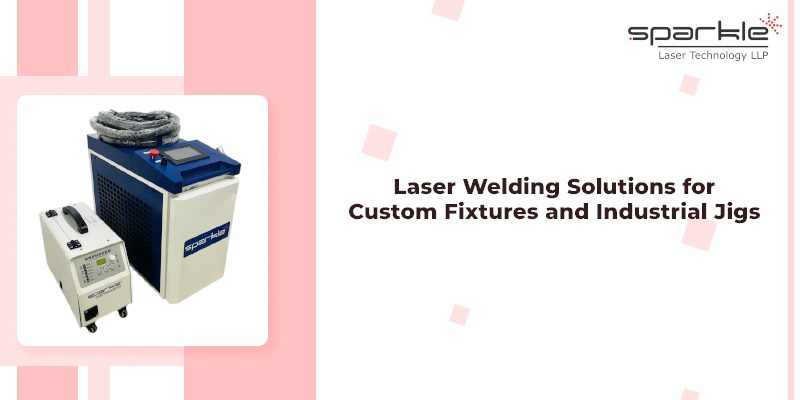
A 3-in-1 metal laser welding system combines laser welding with additional metal-processing functions. Depending on the configuration, this type of equipment can support welding, cutting, and cleaning-related operations for compatible metals.
These functions may be useful when manufacturers need to prepare metal components, join the required parts, and carry out suitable surface or weld-area cleaning during fabrication.
The listed 3-in-1 metal laser welding equipment is available in 1000W, 1500W, and 2000W power options. Its product information identifies stainless steel, aluminium, brass, and copper among the compatible metals and describes a welding gun with an optical focusing system and precision controls.
For custom fixtures and industrial jigs, manufacturers can evaluate this type of system for compatible metal assemblies. The actual suitability will depend on the component dimensions, material thickness, required joint quality, and production conditions.
Laser Welding Compared with Conventional Welding
Different welding processes offer different advantages. The choice depends on the fixture design, material, joint access, production quantity, and required finish.
| Comparison factor | Laser welding | Conventional arc welding |
| Heat input | Concentrated heat source | Generally broader heat application |
| Distortion | Can reduce distortion in suitable applications | May require additional distortion control |
| Weld appearance | Can produce narrow, controlled seams | Depends on process and operator technique |
| Joint fit-up | Requires accurate fit-up | Generally more tolerant of larger gaps |
| Applications | Suitable for selected precision metal assemblies | Used across a wide range of fabrication work |
| Setup requirements | Requires appropriate laser equipment and safety arrangements | Requires process-specific welding equipment |
Laser welding is not automatically the right choice for every custom fixture. Conventional welding may remain suitable for thicker structures, larger assemblies, or joints where gap tolerance and filler material are important.
Steps to Evaluate a Laser Welding System Before Production
Before selecting a laser welding system, manufacturers should establish the actual requirements of the fixture or jig.
The process can be evaluated through the following stages:
- Review the design: Identify the components, joint locations, dimensions, and functional surfaces.
- Confirm the material: Check the metal grade, thickness, and surface condition.
- Prepare sample joints: Evaluate the joint design and fit-up using representative materials.
- Check welding parameters: Establish suitable settings for the intended application.
- Inspect the completed assembly: Review weld appearance, alignment, and dimensional accuracy.
- Evaluate repeatability: Confirm that the same process can produce consistent results across multiple assemblies.
These steps help manufacturers determine whether a laser welding solution can meet their production requirements before introducing it into regular operations.
Final Thoughts
Laser welding solutions for custom fixtures and industrial jigs can support the fabrication of metal frames, brackets, locating supports, mounting plates, and other tooling components. The focused heat source can help control the welding area and reduce distortion in suitable applications, which is important when the finished assembly must maintain its intended dimensions.
However, good results depend on more than selecting a laser welding machine. Material compatibility, joint preparation, accurate fit-up, clamping, welding sequence, and dimensional inspection all influence the finished fixture.
By evaluating these factors and testing representative assemblies, manufacturers can determine whether a 3-in-1 metal laser welding system is appropriate for their custom tooling and industrial fabrication requirements.