In the automotive industry, compliance is a critical part of manufacturing. Every component must meet strict standards to ensure safety, quality, and reliability. One of the key requirements in this process is proper marking, which allows each part to be identified and traced throughout its lifecycle.
As manufacturing becomes more advanced, the need for accurate and durable marking has increased. Traditional methods often fail to meet these expectations, especially when parts are exposed to harsh conditions. This is where laser marking technology plays an important role in modern auto parts manufacturing.
How Automotive Manufacturers Stay Compliant?
Compliance in auto parts manufacturing ensures that every component meets required standards and can be verified at any stage. Marking is a fundamental part of this process, as it helps in identifying and tracking components.
Auto parts are typically marked with:
- Part numbers and identification details
- Batch or lot information
- Manufacturing data
- Serial numbers for traceability
These markings must remain clear and readable over time, even when the parts are used in demanding environments.
Types of Markings Used in Auto Parts
Different types of markings are used in auto parts depending on the requirement of identification and traceability. These markings help ensure that each component carries the necessary information throughout its lifecycle.
Common types of markings include:
- Serial number marking for unique identification
- Barcode or QR code marking for quick scanning
- Batch and lot marking for production tracking
- Date and manufacturing details for verification
Each type of marking serves a specific purpose, but all of them require clarity and durability to remain effective.
Limitations of Traditional Marking Methods
Traditional marking methods such as ink printing, labeling, and mechanical stamping have been commonly used. However, these methods often face challenges when it comes to durability and precision.
Some common issues include:
- Ink markings fading due to heat or friction
- Labels getting damaged or removed during usage
- Inconsistent or unclear stamping on small components
Because of these limitations, maintaining consistent marking quality becomes difficult, especially in high-volume production environments.
Why Durability of Marking Matters in Auto Parts?
In automotive applications, components are exposed to real-world conditions such as heat, pressure, vibration, and chemical exposure. Markings that are not durable can quickly become unreadable, which directly affects compliance and traceability.
Durable marking ensures:
- Long-term readability of part information
- Easy identification during inspections
- Reduced chances of errors in tracking
This makes durability just as important as precision when it comes to marking auto parts.
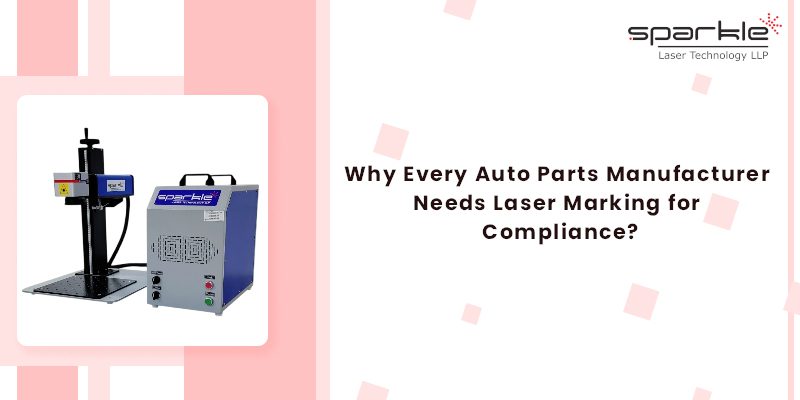
How Laser Marking Supports Compliance?
For compliance, markings must remain readable throughout the lifecycle of the part. Laser marking provides a reliable solution by creating marks that are permanent and resistant to wear.
It helps manufacturers by ensuring:
- Long-lasting and consistent markings
- Clear visibility for inspection and verification
- Reliable identification across all production batches
This reduces the risk of errors and supports compliance requirements more effectively.
Importance of Traceability in Manufacturing
Traceability in manufacturing refers to the ability to track each component from production to final use. This is especially important in the automotive industry, where identifying faulty parts quickly is crucial.
With proper traceability:
- Defects can be identified and isolated efficiently
- Recalls can be managed more effectively
- Production processes can be improved over time
Laser marking plays a key role in enabling traceability by providing permanent identification on every part.
Laser Marking for Metal Parts
Most automotive components are made of metal and operate under challenging conditions. The marking on these parts must withstand heat, pressure, and continuous use.
Laser marking for metal parts offers:
- Strong and durable markings
- High contrast for better readability
- No damage to the material surface
This ensures that markings remain intact even in demanding environments.
How Laser Marking Improves Inspection and Quality Checks?
Clear and accurate marking plays an important role during inspection and quality control processes. When markings are easy to read and consistent, it becomes easier to verify parts at different stages of production.
Laser marking improves inspection by:
- Allowing quick identification of parts during checks
- Reducing errors caused by unclear or faded markings
- Supporting barcode or QR code scanning for faster verification
- Ensuring better visibility during audits and compliance checks
This helps improve overall efficiency and ensures that quality standards are maintained.
Consistency in High-Volume Production
Auto parts manufacturing involves large-scale production where consistency is essential. Each component must have the same level of marking quality.
Laser marking helps maintain consistency by:
- Providing uniform results across all parts
- Reducing manual errors
- Supporting faster and efficient production
This makes it suitable for both small and large manufacturing operations.
Precision in Automotive Part Marking
As automotive components become more compact and detailed, marking them accurately becomes more important. The markings must be clear without affecting the design or functionality of the part.
Laser marking ensures:
- Fine and accurate detailing
- Clear readability on small surfaces
- Proper placement of markings
This level of precision helps meet modern compliance and quality standards.
Conclusion
Compliance in automotive manufacturing depends on accurate identification and traceability of components. Marking plays a critical role in ensuring that each part can be verified and tracked when needed.
Laser marking provides a reliable and efficient solution by offering permanent, precise, and consistent markings. This makes it an essential technology for meeting modern compliance requirements in auto parts manufacturing.
Frequently Asked Questions (FAQs)
1. What is the purpose of a laser marking machine?
It is used to create permanent markings on materials for identification and traceability.
2. What are the biggest challenges facing the automotive industry?
Maintaining quality, ensuring traceability, and meeting compliance standards are key challenges.
3. What is traceability in manufacturing?
It is the process of tracking a component from production to its final use.
4. Are there any disadvantages of laser marking?
It requires initial setup, but provides long-term reliability and consistent results.