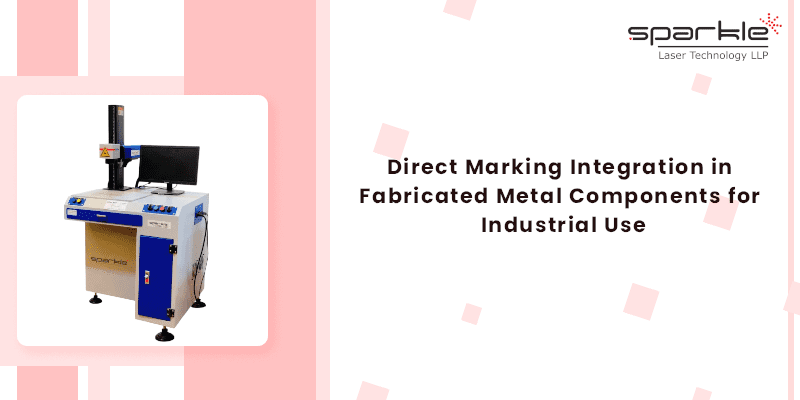
Industrial manufacturing has changed significantly over the years. Modern fabrication industries no longer focus only on production speed and structural quality. Today, manufacturers also need reliable identification systems that support traceability, inspection accuracy, inventory management, and long-term operational efficiency.
In fabricated metal manufacturing, components often move through multiple stages, including cutting, welding, machining, coating, assembly, and quality inspection. During these stages, maintaining proper identification becomes extremely important. If markings become unreadable or inconsistent, it can create delays in production, confusion during inspections, and difficulties in tracking components throughout the workflow.
This is why direct marking integration has become an essential part of modern industrial manufacturing systems. Instead of relying on labels, stickers, or temporary surface printing, manufacturers now prefer permanent marking solutions that create durable identification directly on fabricated metal surfaces.
In many industries, laser engravers for metal and industrial metal engraving systems are widely used because they provide permanent, clean, and highly accurate markings suitable for demanding production environments.
Why Direct Marking Has Become Important in Fabricated Metal Industries?
Fabricated metal components are used across multiple industrial sectors, including:
- Automotive manufacturing
- Industrial machinery
- Heavy engineering
- Construction equipment
- Structural fabrication
- Metal processing industries
These industries handle large numbers of components daily, and each component often requires unique identification for production management and quality control purposes.
Manufacturers commonly engrave:
- Product codes
- Batch numbers
- Serial identification
- Inspection markings
- Traceability information
Without proper identification systems, managing fabricated components across production lines becomes difficult, especially in high-volume industrial environments.
This is one of the major reasons why direct marking systems are now integrated into modern fabrication workflows.
Growing Demand for Permanent Metal Marking
Industrial components are regularly exposed to harsh operating conditions. Fabricated metal parts may encounter:
- Heat and pressure
- Friction and vibration
- Oil and industrial chemicals
- Outdoor environmental exposure
- Continuous operational usage
Because of these conditions, temporary identification methods often fail to maintain long-term readability.
Permanent marking has become a preferred solution because it helps manufacturers maintain:
- Long-term identification visibility
- Better traceability
- Consistent inspection accuracy
- Improved workflow coordination
This growing demand has increased the use of:
- Metal engraving systems
- Industrial marking technologies
- Precision engraving applications
- Metal laser engraving solutions
Manufacturers increasingly rely on laser-based systems because they provide durable and accurate marking quality suitable for industrial production environments.
Problems with Traditional Marking Methods
Traditional marking methods such as paint printing, adhesive labels, manual stamping, or ink-based marking are still used in some industries, but they often struggle to meet modern manufacturing requirements.
Some common limitations include:
- Markings are fading during the production stages
- Damage caused during handling and transportation
- Inconsistent readability on metal surfaces
- Increased maintenance requirements
- Difficulty maintaining marking quality in bulk production
For example, fabricated components moving through coating or welding processes may lose temporary markings completely. This can create delays during inspection and assembly operations.
These challenges have encouraged manufacturers to adopt permanent industrial metal marking systems that provide stable and durable identification results.
How Laser Marking Improves Fabricated Metal Identification
Laser marking provides a highly controlled and non-contact method for engraving metal surfaces. Instead of applying external material onto the component, the system creates permanent markings directly on the metal itself.
In industrial production environments, laser marking machines for metal and metal engraving machines help maintain accurate identification across different fabrication stages.
This improves manufacturing operations by:
- Producing permanent and readable markings
- Maintaining consistent engraving quality
- Supporting high-speed production workflows
- Reducing manual identification errors
This becomes especially important in fabrication industries where large numbers of components are processed continuously throughout the day.
Precision Engraving for Industrial Metal Components
Fabricated metal parts often contain compact or irregular surfaces where markings must remain clear without affecting the structure or finishing quality of the component.
Precision engraving helps manufacturers maintain:
- Clear component identification
- Better readability on metal surfaces
- Accurate production tracking
- Professional engraving quality
This is particularly useful in industries where components require long-term traceability throughout operational use.
Using precision engraving technologies and metal laser engraving systems allows manufacturers to maintain stable identification quality even on detailed or complex fabricated components.
Importance of Traceability in Industrial Production
Modern industrial manufacturing depends heavily on traceability systems. Components often move through multiple departments and production stages before final assembly or delivery.
Proper identification marking helps manufacturers:
- Track components across production workflows
- Improve quality inspection efficiency
- Simplify inventory management
- Reduce operational confusion
- Support maintenance and replacement operations
In high-volume industrial environments, readable identification markings help maintain smooth coordination between manufacturing teams and inspection departments.
This has made industrial marking integration an important part of fabrication processes.
Consistency in High-Volume Manufacturing
Fabrication industries often operate with large-scale production volumes where maintaining marking consistency is extremely important.
Manual marking processes can create:
- Uneven engraving quality
- Alignment inconsistencies
- Readability variations
- Production delays
Laser engraving systems help solve these issues by:
- Producing uniform marking quality
- Supporting automated production environments
- Maintaining readability across production batches
- Reducing operational interruptions
This allows manufacturers to maintain workflow stability while improving production efficiency.
Permanent Marking Without Affecting Surface Quality
One of the biggest requirements in fabricated metal marking is maintaining surface integrity while creating durable identification.
Laser engraving systems help achieve this balance by:
- Providing controlled engraving depth
- Reducing physical contact with the component
- Maintaining clean engraving quality
- Supporting precision metal marking applications
This makes laser engraving suitable for fabricated metal parts used in industrial machinery, structural applications, and engineering systems.
Role of Metal Engraving Machines in Industrial Applications
Modern industrial facilities require reliable marking systems that can support continuous manufacturing operations without affecting production speed.
In many fabrication environments, metal engraving machines and laser engravers for metal are integrated directly into production lines for:
- Permanent component identification
- Production tracking
- Industrial traceability
- Inspection and quality control
Their ability to maintain stable and repeatable marking quality makes them highly suitable for fabricated metal industries.
Better Workflow Coordination Through Integrated Marking
Industrial production lines involve multiple connected operations working simultaneously. Even small identification issues can affect workflow coordination and inspection efficiency.
Integrated marking systems help manufacturers by:
- Reducing manual identification processes
- Supporting faster inspection procedures
- Improving production coordination
- Maintaining continuous workflow operations
This helps industries manage high-volume fabricated metal production more efficiently.
Direct Marking in Modern Industrial Manufacturing
As manufacturing systems continue to become more automated and production-focused, direct metal marking integration is becoming increasingly important across industrial sectors.
Manufacturers today require systems that support:
- High-speed industrial marking
- Permanent identification solutions
- Precision engraving quality
- Long-term durability and readability
This has made laser-based industrial marking technologies an important part of modern fabricated metal manufacturing environments.
Conclusion
Fabricated metal industries require reliable identification systems to maintain production accuracy, workflow coordination, and operational traceability. As manufacturing environments continue to become more automated and large-scale, direct marking integration has become increasingly important across industrial production lines.
Permanent metal marking and precision engraving technologies help manufacturers maintain durable identification while improving inspection efficiency and workflow management. With the growing demand for stable industrial traceability systems, laser marking technologies have become an essential part of modern fabricated metal manufacturing operations.
FAQs
1. What is direct metal marking?
Direct metal marking is the process of creating permanent identification markings directly on metal surfaces for traceability and industrial manufacturing purposes.
2. Why is permanent marking important in fabricated metal industries?
Permanent marking helps maintain long-term identification, production traceability, and inspection accuracy throughout industrial workflows.
3. Which machine is used for industrial metal marking?
Laser marking machines for metal and industrial metal engraving systems are commonly used for fabricated component identification applications.
4. Can laser engraving be used on fabricated metal components?
Yes, laser engraving is widely used because it provides permanent, precise, and durable markings suitable for industrial environments