It is generally expected that custom signboards should appear distinctive, clean, and professionally finished. Yet sign makers have to produce a variety of sizes, shapes, lettering styles, logos, and designs without having to deal with each order in a completely manual way.
This is where CO₂ laser cutting can play an important role in the manufacture of signboards. Since a CO₂ laser is capable of cutting and engraving various non-metallic materials such as acrylic, plastic, wood, and other advertising materials, it can be used for producing letters, logos, decorative features, templates, and entire sign components. The range of CO₂ lasers offered by Sparkle Laser specifically includes acrylic and advertising materials among the applications it supports. Additionally, CO2 laser cutting for signboards enhances precision and efficiency in the production process.
For a sign manufacturer, it is not just about being able to cut a sheet. The real benefit lies in the ability to turn a digital design into physically shaped parts with dimensions that can be consistently reproduced.
CO2 Laser Cutting for Signboards: Precision and Versatility
Traditional sign making can involve manually cutting, routing, sawing, and drilling, as well as finishing. While such methods can still be useful, highly customized designs might require more preparation and manual work.
The design can be prepared in digital form and then transmitted to the machine for processing using a laser cutting system. The cutting path matches the digital artwork, which enables manufacturers to produce letters, symbols, logos, curves, holes, and decorative shapes from the material that has been selected.
For a broader look at how CO₂ laser systems can support creative production across different materials and applications, manufacturers can also explore CO₂ laser cutting in creative manufacturing.
It is especially useful when a customer wants a sign that has an unusual shape.
Instead of limiting the sign to a rectangle or simple panel, manufacturers can produce:
- Custom lettering
- Decorative borders
- Individual letters
- Brand logos
- Curved shapes
- Cut-out patterns
- Layered sign elements
- Detailed decorative designs
It is here that the need for specially made laser-cut signs becomes part of the production process.
What Kinds of Materials Can CO₂ Lasers Engrave for Use in Signboards?
CO₂ laser machines work well for sign materials that are not metal.
Acrylic is one of the most popular materials for custom signboards because it can be cut into letters, logos, borders, and decorative shapes. For more information on CO₂ laser processing of acrylic, manufacturers can refer to this detailed material guide.
Another advantage of acrylic for sign production is that it comes in a variety of colours, finishes, and degrees of transparency. This provides manufacturers with a good deal of flexibility when making both illuminated and non-illuminated signs.
For instance, a transparent acrylic sheet can be cut to form a logo or lettering, while coloured acrylic can be used for contrasting layers.
What needs to be taken into account is that the material must be suitable for use with the laser process and must be tested at the specified thickness.
What Makes Acrylic So Important in the Manufacture of Signboards?
Acrylic is the material most frequently linked with laser-cut signage since it can be accurately processed using CO₂ laser systems.
If an acrylic sheet is cut correctly, the resulting edge can appear smooth and polished. CO₂ laser cutting is commonly used for making acrylic lettering, signs, displays, and decorative parts. Because of this, laser cut acrylic sheet is a particularly relevant search term for both manufacturers and customers who are looking for custom signage.
Acrylic can be used for:
- Storefront lettering
- Reception signs
- Office signage
- Directional signs
- Decorative wall signs
- Logo panels
- Display stands
- Layered lettering
- Illuminated sign components
The final design is determined by the thickness of the material, its colour, the finish it has, and the method of construction used in the finished sign.
Creating a Laser Cut Logo
A company’s logo usually has to be reproduced exactly since even the smallest alteration to its shape can affect how the brand looks.
The design file can be used as the basis for the cutting path through laser cutting, which is why it is appropriate for detailed logos containing curves, openings, sharp corners, and smaller features.
The individual letter or shape formed by the laser cut logo can be mounted onto another panel, combined with acrylic layers, or included as part of a larger sign assembly.
The greater the detail in the logo, the more essential it is to take into account the minimum feature size, the thickness of the material, and the material’s ability to retain those details after it has been cut.
How Does Laser Cutting Aid in the Creation of Custom Sign Shapes?
It is not necessary for all signs to be rectangular.
Customers can ask for circular signs, rounded panels, decorative silhouettes, irregular contours, or shapes based on letters. It is possible to reproduce these custom outlines through a digital laser workflow.
Instead of using a physical cutting template, the machine follows the specified cutting path.
This is useful for businesses that regularly make signs in various shapes, especially when each customer needs a different design.
The process also makes it easier to produce repetitive components. If the same shape is needed again at a later stage, the digital design can be used as the basis for another production run.
What Is the Importance of Accuracy in the Cutting of Signboards?
A sign is usually assessed according to how well its various parts fit together.
The sign may appear less professional if the individual letters have irregular dimensions or if the logo is slightly different from the approved artwork.
Accuracy is even more crucial when it comes to multi-layer signage since several acrylic or plastic parts need to align with each other, so the dimensions of each layer have to be controlled.
Although the laser cutting process can help ensure that digital designs are reproduced consistently, the actual accuracy still varies according to the machine’s setup, the movement of the material, focusing, cutting parameters, and the way in which the material is handled.
Laser Cutting for Letters and Typography
Typography is one of the most frequently required elements when it comes to custom signage.
A manufacturer of signs might need letters in a variety of fonts, sizes, thicknesses, and shapes. In some cases, the design contains narrow internal spaces or small openings that are difficult to reproduce with ordinary manual tools.
Laser cutting enables letters to be cut out of appropriate materials so that the letters can be placed separately or put together to form a complete sign.
This is especially helpful in the case of dimensional lettering, since each character is cut separately and then placed onto a wall, panel, board, or backing surface.
The designer must still take into consideration the physical limitations of the material chosen. Features that are extremely thin may not be appropriate for all sheet thicknesses.
How CO₂ Laser Cutting Helps With Layered Signboards
Depth can be achieved through layered signage, which involves combining a number of sheets or materials.
One layer can act as the primary background, with another layer holding the letters or logo. Further layers can be employed to produce borders, shadows, contrast, or decorative elements.
The accuracy of the cutting process helps ensure that these layers remain aligned.
For instance, the manufacturer can create the outer shape of the sign using a digital file and then make a separate file for the lettering and another one for the decorative cutouts.
As a result, the production process becomes more structured instead of having each element created individually.
What About Metal Signboards?
The expression laser cut metal signs is commonly used by people who are looking for custom metal signage, but when choosing a CO₂ laser, the material has to be considered carefully.
CO₂ laser systems are very appropriate for materials such as acrylic and other non-metallic sign materials. With bare metal, on the other hand, you generally come across a different type of application, and it is more typically handled using fiber laser systems.
Although CO₂ lasers can be used to process some coated or specially prepared metal materials, the laser machine and the process have to be suitable for that particular application.
This distinction is important for those who make signs. A CO₂ machine should not automatically be offered as a solution that works for all types of metal signs.
For a sign that is mainly made from acrylic, wood, plastic, or appropriate advertising material, CO₂ cutting can be highly relevant.
Is It Possible to Use a CO₂ Laser for Cutting Acrylic?
Yes, a practical commercial use of CO₂ laser technology is acrylic cutting.
Using a CO₂ laser, an acrylic cutting service can produce letters, signs, panels, display items, and custom shapes from acrylic sheets.
Service providers are able to handle either one-off custom orders or repeated production. If a customer supplies a design, the manufacturer can turn it into a cutting file and then produce the necessary components.
The precise thickness that can be processed and the cutting speed depend on the laser power, lens, thickness of the sheet, type of acrylic, and machine configuration.
CO₂ laser systems are used commercially for cutting and engraving acrylic for signs and displays.
How Does Engraving Go With Signboard Cutting?
It is not necessary for a sign to involve cutting alone.
CO₂ lasers are also capable of engraving appropriate materials, so the same production process can be used for both cutting and surface detailing.
For instance, the manufacturer can cut out the acrylic sign in the required shape and then etch further text, patterns, or decorative features onto another part of the material.
This makes it possible to produce more customized products without introducing a completely separate production method for each design element.
Signboards With Detailed Decorative Patterns
Customers may want signs that include more than just text and logos.
The design may include decorative patterns, geometric cutouts, borders, icons, and other elements.
A digital cutting process makes it easier to reproduce such details consistently. The design can be made once, tested, modified, and then put to use for production.
The design must still take into account the physical properties of the material since very narrow bridges or delicate internal features could break when the item is handled, even though the laser is capable of cutting them.
The manufacturer must therefore take both the accuracy of the design and the strength of the final part into account.
Why Does Repeatability Matter for Sign Manufacturers?
Custom production does not mean that every product has to be completely different.
A business can receive repeated orders for the same chain of stores, office, franchise, event, or branding system. In those situations, it is important to keep the dimensions consistent from one sign to another.
A workflow that uses digital laser cutting makes it easier to reproduce the approved design.
The manufacturer may keep the cutting file and use it again if a replacement plate or an additional quantity is needed.
This means there is less need to manually recreate the same shape every time.
How Can Sign Manufacturers Reduce Cutting Errors?
Good results begin before the material gets to the machine.
It is necessary to check the digital artwork to make sure it has the correct dimensions, the lines are in the right position, the small details are accurate, the internal cutouts are properly created, and the general design is correct.
The material should then be checked to make sure it has the correct thickness and is in good condition.
When the machine is being set up, settings such as focus, power, speed, and other parameters should be chosen based on the actual material.
It is useful to make a cut sample before working through the whole sheet, especially when a new material or thickness is being used.
This method may help identify problems before they have an impact on a larger amount of material.
A Practical Workflow for Custom Laser-Cut Signs
A controlled production process can be structured as follows:
1. Prepare the Design
Prepare or obtain the logo, text, shape, or sign layout needed in an appropriate digital format.
2. Select the Material
Select the type of material for the sign, such as acrylic, wood, plastic, or another compatible material, depending on the end use.
3. Examine the Design With Regard to Cutting
Examine the small features, corners, holes, internal spaces, and overall dimensions.
4. Test the Material
Check a small sample to determine the appropriate cutting and engraving settings.
5. Cut the Components
Process the material according to the approved design.
6. Inspect the Pieces
Before assembly, check the dimensions, edge quality, details, and overall appearance.
7. Assemble the Sign
Assemble the cut letters, logos, backing panels, or other components according to the final design.
How a CO₂ Laser Cutting System Fits Into Signboard Manufacturing?
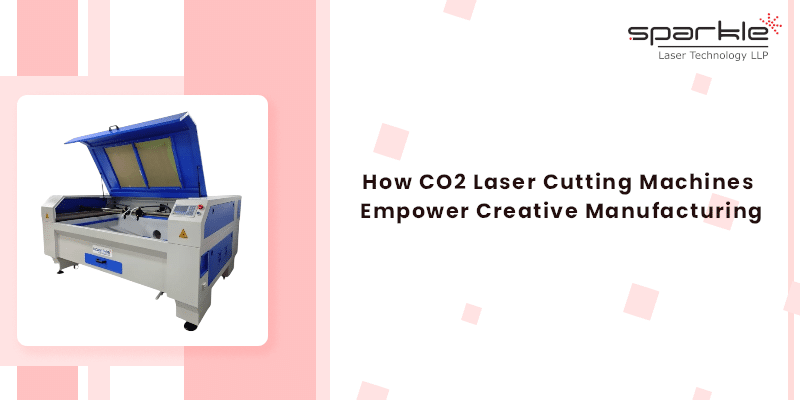
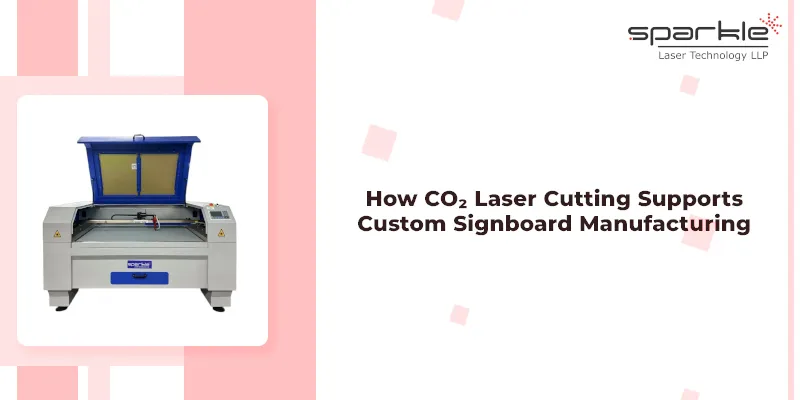
A machine like the CO₂-1390 Laser Cutting Machine is made for use in cutting and engraving acrylic, plastic, wood, and advertising materials. The product information covers acrylic work, advertising materials, and laser cutting and engraving applications.
It is therefore appropriate for use in signboard production where the main materials involved are suitable non-metallic sheets and the work includes custom shapes, lettering, logos, and decorative parts.
The precise outcome of production still varies according to the type of material, thickness of the sheet, laser power, optics, cutting parameters, and design.
Final Thoughts
CO₂ laser cutting can serve an important role in the manufacture of custom signboards by turning digital designs into accurately cut physical parts.
The process offers a practical method for producing detailed designs with consistent dimensions when creating custom lettering, logos, decorative panels, and custom laser-cut signs from acrylic sheet material.
The technology is very useful when manufacturers require flexibility. One job might call for a simple logo, another for letters that are cut individually, and another for a completely custom sign shape.
At the same time, the choice of materials is still important since CO₂ laser cutting is suitable for compatible acrylic and other non-metallic sign materials, whereas bare-metal signage usually needs a different type of laser technology.
The optimal outcomes are achieved by using accurate digital design, appropriate materials, tested parameters, careful cutting, and proper inspection. By adopting this method, CO₂ laser cutting can become a valuable element in the production of custom, detailed, and repeatable signboard components.
FAQs
1. What kinds of materials can a CO₂ laser cut when making signboards?
CO₂ lasers are capable of working with various materials, including acrylic, wood, plastic, paper, rubber, and some types of advertising material. The specific materials depend on the machine and the way it is used.
2. Can a CO₂ laser cut acrylic signs?
Yes. CO₂ lasers are widely used for cutting acrylic for signs, displays, letters, and decorative parts.
3. Can I use a CO₂ laser to cut metal signs?
Bare metal is usually not the main purpose of a standard CO₂ cutting machine. In certain cases, coated or specially prepared materials can be processed, but the cutting of bare metal is generally carried out using fiber laser technology.
4. Can a CO₂ laser cut a logo?
Yes. A CO₂ laser can cut logos from suitable materials such as acrylic, wood, and some plastics. The result depends on the material and the selected settings.
5. What is the benefit of using laser-cut acrylic sheet for signage?
Using a laser cutter, acrylic sheets can be transformed into custom letters, logos, shapes, panels, and decorative items using detailed digital designs and clean cuts.
6. Is a CO₂ laser used exclusively for cutting signs?
No. CO₂ laser systems can also be used for engraving suitable materials, enabling both cutting and surface detailing to take place within the same general production process.
7. What should sign makers do before starting production?
Different materials, colours, thicknesses, and surface conditions can react differently to laser energy. Testing should be carried out to determine the appropriate parameters before the full production run.
8. Is it appropriate to use a CO₂ laser to cut custom laser-cut signs?
Yes. It is very useful for making custom signs from acrylic, plastic, wood, and other compatible non-metallic sign materials.