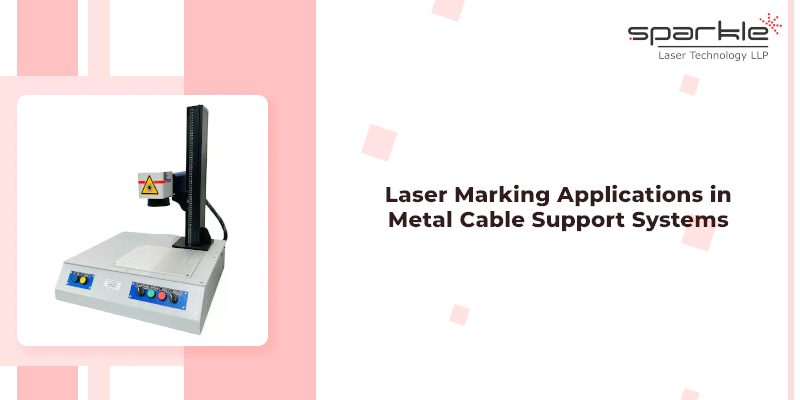
Modern industrial infrastructure depends heavily on reliable cable management systems to ensure safety, organization, and uninterrupted power distribution. From manufacturing plants and commercial buildings to power stations, data centers, oil and gas facilities, and infrastructure projects, metal cable support systems play a critical role in protecting electrical and communication cables. These systems include cable trays, cable ladders, cable trunking, support brackets, clamps, and mounting accessories that must withstand demanding industrial environments while maintaining long-term reliability.
As industrial projects become larger and more complex, manufacturers are placing greater emphasis on product identification, industrial traceability, and quality control throughout the production process. Every cable support component requires clear identification to simplify installation, maintenance, inventory management, and compliance with industry standards. This has made laser marking machine an increasingly valuable solution for manufacturers producing metal cable support systems.
Unlike adhesive labels or printed markings that may peel, fade, or deteriorate over time, laser marking creates permanent, high-precision markings directly on the metal surface. This helps manufacturers maintain durable identification while preserving the quality and appearance of every component.
Why does product identification matter in Metal Cable Support Systems?
Metal cable support systems are manufactured in a wide range of sizes, specifications, and load capacities. During large industrial projects, thousands of individual components may be installed across different locations. Without proper identification, managing these products throughout manufacturing, transportation, installation, and maintenance becomes increasingly difficult.
Permanent identification enables manufacturers and contractors to quickly recognize component specifications while supporting accurate inventory management and installation processes. Product codes, batch numbers, manufacturer information, and compliance markings remain visible throughout the product lifecycle, even when exposed to challenging industrial environments.
As industries continue adopting higher quality standards and more organized maintenance practices, permanent product identification has become an essential requirement rather than an optional feature.
Challenges Faced With Traditional Marking Methods
For many years, manufacturers relied on stickers, ink printing, and adhesive labels to identify cable support components. Although these methods are relatively simple to implement, they often fail to withstand the demanding conditions encountered in industrial environments.
Metal cable support systems are regularly exposed to dust, moisture, chemicals, temperature fluctuations, outdoor weather conditions, and routine maintenance activities. Under these circumstances, labels may peel away while printed information gradually fades, making product identification difficult.
Poor identification can create confusion during installation, increase maintenance time, and reduce traceability throughout the supply chain. As industrial projects become larger and more technically demanding, manufacturers increasingly require identification methods capable of delivering long-lasting performance without additional maintenance.
This growing need has encouraged many manufacturers to adopt permanent laser marking technologies.
How Laser Marking Improves Manufacturing Efficiency?
Laser marking has become an important manufacturing technology because it combines precision, durability, and production efficiency within a single process. Rather than applying temporary labels or printed information, manufacturers create permanent markings directly on the metal surface without affecting structural integrity.
The technology improves manufacturing efficiency by eliminating consumables such as labels and ink while reducing maintenance requirements associated with traditional marking methods. It also allows manufacturers to maintain consistent marking quality across high-volume production lines.
Laser marking supports various identification requirements, including serial numbers, product specifications, company logos, batch numbers, compliance information, and traceability codes. Since the markings become part of the material itself, they remain readable throughout transportation, installation, and long-term industrial use.
Manufacturers also benefit from faster production workflows because laser marking integrates easily into modern automated manufacturing environments.
Applications of Laser Marking in Metal Cable Support Systems
Laser marking is widely used across different cable support products because it provides permanent identification without compromising product quality.
It is commonly applied to:
- Cable trays
- Cable ladders
- Cable trunking
- Support brackets
- Cable clamps
- Mounting channels
- Junction boxes
- Metal cable accessories
Manufacturers use laser marking to permanently apply product specifications, batch numbers, manufacturer logos, compliance markings, installation references, and traceability information. These markings help installers identify components correctly while simplifying maintenance and replacement throughout the system’s operational life.
The ability to produce clear, permanent markings also improves overall product presentation, reinforcing quality standards and strengthening manufacturer credibility.
Supporting Industrial Traceability and Quality Assurance
As industrial projects continue to grow in size and complexity, industrial traceability has become a critical requirement across manufacturing sectors. Every cable tray, support bracket, ladder, clamp, and mounting accessory must be easily identifiable throughout its lifecycle. Clear product information helps manufacturers maintain accurate production records while enabling contractors and maintenance teams to identify the correct components quickly during installation and servicing.
Permanent identification also strengthens quality assurance by allowing manufacturers to trace individual batches back to specific production records. If maintenance or replacement is required years after installation, permanently marked information remains readable, making inspections faster and reducing the risk of using incorrect components. This level of traceability improves operational efficiency while supporting industry compliance and customer confidence.
Benefits of Laser Marking in Metal Cable Support Manufacturing
Manufacturers are increasingly adopting laser marking because it provides long-lasting identification without compromising the structural integrity or appearance of metal components. Unlike temporary labels or ink-based printing, the markings remain visible even after prolonged exposure to dust, moisture, chemicals, vibration, and changing environmental conditions.
The technology also supports modern manufacturing requirements by improving consistency across production lines. Every component receives uniform identification regardless of production volume, helping manufacturers maintain standardized quality throughout large-scale projects. Since the marking process is non-contact, it minimizes material damage while reducing maintenance requirements associated with traditional identification methods.
In addition to improving durability, permanent marking contributes to better inventory control, streamlined warehouse management, and faster installation because every component can be identified accurately throughout the supply chain.
Future Trends in Metal Cable Support System Manufacturing
Technological innovation, digital production systems, and increasing demand for smarter infrastructure are shaping the future of industrial manufacturing. Manufacturers are investing in advanced manufacturing technology that improves productivity while supporting higher quality standards and operational efficiency.
One of the most significant developments is the integration of industrial automation into production facilities. Automated manufacturing processes require accurate and permanent product identification that can be read consistently throughout production, packaging, transportation, and installation.
Growing infrastructure investments, expansion of renewable energy projects, data centers, commercial construction, and smart cities are expected to increase demand for organized cable management systems. As these industries continue to grow, manufacturers will place greater emphasis on production efficiency, digital traceability, and reliable product identification to remain competitive.
Permanent laser marking aligns with these trends by supporting faster production workflows, reducing operational complexity, and helping manufacturers meet evolving customer expectations.
Why Is Permanent Identification Becoming an Industry Standard?
Industrial buyers increasingly expect products to include durable identification that remains legible throughout years of service. This expectation has encouraged manufacturers to move away from temporary marking methods and adopt permanent solutions that improve reliability and reduce maintenance.
Permanent product identification helps support equipment servicing, replacement planning, inventory audits, warranty verification, and quality inspections. It also strengthens manufacturer credibility by demonstrating attention to detail and commitment to product quality.
As manufacturing standards continue evolving, companies that invest in reliable identification systems will be better positioned to meet customer requirements while improving operational performance across the supply chain.
Conclusion
Metal cable support systems form the foundation of safe and organized electrical infrastructure across manufacturing plants, commercial buildings, power facilities, and industrial projects. As these industries continue expanding, manufacturers must ensure every component can be accurately identified throughout its operational life.
Laser marking has become an effective solution because it provides permanent, high-precision identification that supports product identification, industrial traceability, manufacturing efficiency, and long-term quality assurance. Unlike conventional labels and printed markings, laser-marked information remains readable even under demanding industrial conditions.
As manufacturers continue embracing automation, digital manufacturing, and higher quality standards, permanent marking technologies will play an increasingly important role in improving productivity, simplifying maintenance, and strengthening customer confidence.
Frequently Asked Questions
1. Why is laser marking important for metal cable support systems?
Laser marking creates permanent identification that improves traceability, quality assurance, and long-term product recognition.
2. What information can be permanently marked on cable support components?
Manufacturers commonly mark serial numbers, product specifications, batch codes, manufacturer details, compliance information, and identification codes.
3. Why is permanent marking better than adhesive labels?
Permanent markings remain readable despite moisture, dust, chemicals, abrasion, and outdoor exposure, while labels may peel or fade over time.
4. Which industries use metal cable support systems?
They are widely used in manufacturing facilities, commercial buildings, power plants, oil and gas projects, infrastructure developments, data centers, and industrial processing plants.
5. How does permanent product identification improve manufacturing operations?
It supports inventory management, quality assurance, maintenance planning, product traceability, and faster component identification throughout the product lifecycle.