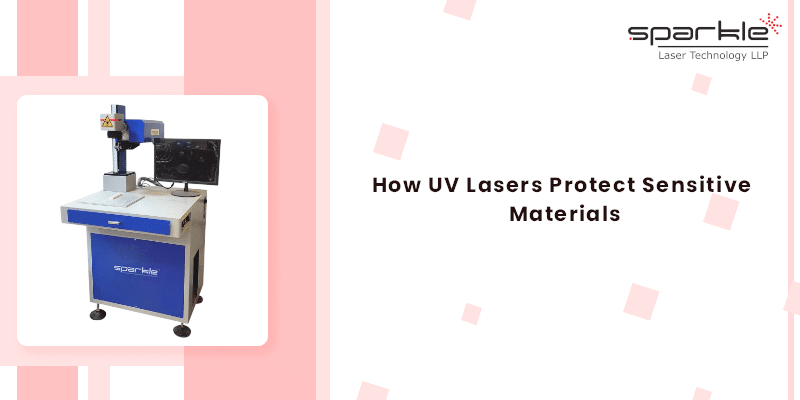
Marking delicate or temperature-sensitive materials has long posed a challenge for many manufacturers. Materials such as plastics, glass, silicone, and thin film often respond quickly to heating, and thus, typical laser systems situated in a laser heating footprint can easily produce warpage, discoloration, or surface damage. Employers involved in constructing sensitive product components will often require a marking solution to provide accuracy without damaging the chemical compound of the designated material. This is where UV laser marking comes into play.
Instead of conventional lasers that will burn or melt via heat, UV laser marking is often referred to as “Cold Marking.” A UV laser beam is absorbed at the microscopic level, resulting in high-contrast marks with virtually no thermal heat or damage to the marked surface.Considering the materials being marked, this is especially important for application in industries where cleanliness, permanence, and non-damaging marks will provide an opportunity to brand electronics, medical devices, jewellery, or premium packaging.
UV laser technology has quickly become a revolution on the manufacturing line that allows employers to safely mark delicate materials with clear and durable identification.
What is UV Laser Marking?
UV lasers function at a shorter wavelength than most infrared or fiber lasers. The wavelength in many industrial UV systems is around 355 nanometres. The shorter wavelength provides:
- Smaller, more contoured laser spots.
- Higher absorption by selected materials.
- Reduced thermal load to the surface.
In simple terms, the UV laser is the preferable mode for cold marking, because it does not use heat to create a permanent mark. This permits very high-contrast marking, without damaging fragile materials.
Why is UV Marking Gentle (and Safe) for Sensitive Materials?
Least Heat, More Precision
Unlike conventional lasers, UV lasers induce very little heat in the etching process. The heat affected zone (HAZ) surrounding the etching area is very small. Therefore, materials that would warp, melt, or discolor from heat exposure (like plastics or coated films) maintain their integrity after being marked.
Extremely Fine Detailing
This short wavelength also means ultra-fine, micron-marking produced by the UV laser. You can etch small logos, serial numbers, QR codes, or micro-text and it will be legible permanently! This is excellent for electronics, medical devices, or packaging with a need for diffuse marks to remain visible.
Non-Contact Process
The laser beam does not make actual contact with the surface. As a result, there is no scratching or mechanical stress (force) applied to fragile pieces. Because of this non-contact nature, UV marking can be seen as very safe for items that are prone to scratching or surface damage.
High Contrast, Heavy Duty Marks
UV laser marking produces marks that are high quality and high contrast, clean and permanent marks with inks, solvents, or dyes. Their marks are highly resistant to wear, fading, or peeling from the surface substrate. It’s even a fact that when used on light-colored or transparent materials, the contrast will often exceed what was achieved with a standard laser or printing process.
Materials Most Suited for Benefit from UV Laser Marking
UV marking produces exceptional results on a very wide range of sensitive and/or sensitive heat sensitive materials:
- Plastics: ABS, PC, PVC, resins and other polymers used as packaging or consumer items.
- Glass and ceramics: In instances such as labware or decorative items, and even medical containers.
- Silicones and thin films: For items that will combust or deform if overheated.
- Coated metals: as in anodized aluminum when marking or etching the gray mark without ruining the coating.
Real Industry Advantages: Why Manufacturers Choose UV Lasers?
Traceability & Compliance
For regulated industries such as medical devices, aerospace, and electronics, there are times you need permanent, tamper-proof identification. A UV laser can engrave barcodes, QR codes, serial numbers, etc. that remain legible over time and depending on application, tough conditions.
Clean & Eco-Friendly
No consumables such as ink, solvents, or chemicals are involved. Since UV marking and engraving requires limited consumables, the end result is a cleaner process compared to others and reduced back end costs in the future.
Fits into Production
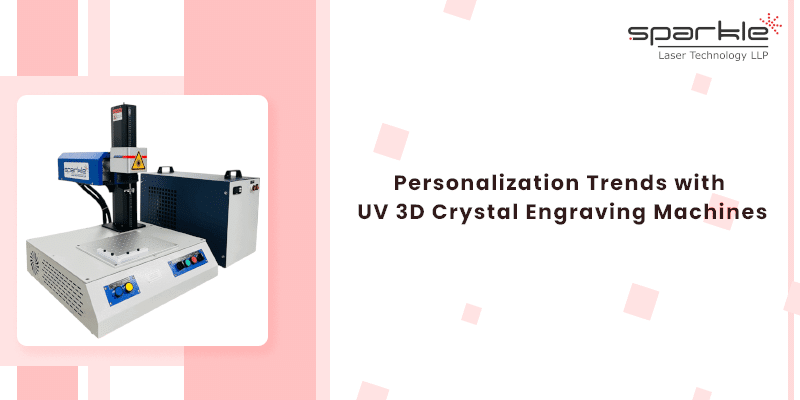
Machines, like the UV Laser Marking Machine, are designed to be compact and efficient, and able to fit into your current production line without a major overhaul. The software comes built-in to the machine, allowing settings to switch between design templates, define specifications, and ensure quality of mark in real-time.
Reliability over Time
UV laser modules are typically built to be robust, and are only minimally maintained. The operation does not produce heat, thereby reducing wear and tear on the system, resulting in more uptime and longer life for the system.
Challenges to Address
Higher Cost: Compared to infrared lasers, UV laser systems are generally more costly, but when also considering lower waste, no consumables, and minimal rework, the ROI can be quite compelling.
Limited Penetration Power: As UV lasers tend to operate at lower power, they are typically not ideal for deep engraving. It’s more advantageous to utilize UV lasers for surface marking, rather than cutting.
Sensitive Optical Components: UV systems tend to have more sensitive optics and need to be handled carefully and maintained on a periodic basis.
Safety Considerations: Due to the short wavelength, proper laser safety and ventilation protocols should be customized in place to avoid exposure or harmful reflections.
Conclusion:
UV laser marking combines precision, permanence, and protection. For companies that work with electronics, medical-related devices, complex packaging, or other fragile components, it is the answer to all your marking needs. Because of its cold marking technology, a UV laser marks the cleanest, highest contrast identification for the most fragile or sensitive type of substrate while not compromising its structural integrity.
If you want to enhance your production process with reliable marking that will not damage your product, the UV Laser Marking Machine is perhaps the best tool available.
FAQs
1. Can UV lasers be used on plastic and glass?
Yes. UV lasers are particularly effective on plastics such as ABS and PC, glass, and ceramics because they produce little heat.
2. Does UV marking damage sensitive materials?
No. Since it has a non-contact process with low heat, it avoids surface damage, melting, or warping.
3. How permanent are UV laser markings?
Yes, permanent. The markings cut through the surface, which makes them resilient to fading or peeling.
4. What are the advantages of UV lasers over fiber or CO₂ lasers?
UV lasers are excellent for applications involving heat-sensitive materials and intricacies because they operate at a shorter wavelength with lower heat levels.
5. Are UV lasers high maintenance?
They are lower maintenance than numerous thermal lasers, but the optics should be handled with care, and the cooling elements should be inspected periodically.