Aluminium is quite a paradox. Everywhere you go, you will find it, and yet, very seldom will you give it a second thought, until it starts to get discoloured, that is. Aluminium is widely used in the production of metal frames and cutlery, as well as parts for the industrial sector. The major reason why aluminium has been the go-to metal is that it is very lightweight, does not rust, and is easy to handle.
However, aluminium over time will inevitably absorb one foe after another, that is, air, moisture, and pollutants, ultimately resulting in the process of oxidation, which is the main culprit for the loss of aluminium’s coveted metallic look. Though aluminium oxidation is not always dangerous, it still can have an ugly side, such as causing a bad-looking metal surface, bonding, and performance issues, among other uses. What many do not understand is that cutting it out is not a head scratcher.
For that matter, there are effective solutions to clear away aluminium oxidation depending on the level of oxidation. Four methods to clean aluminium oxidation will be covered in this post. Beginning with the most fundamental and ending with the methods used in the professional environment, we will progressively move through the list.
1. Soap and Water for Early-Stage Oxidation
If the aluminium surface is just slightly dull or looks a bit dirty, it is most probably still at a very early stage of oxidation. In these situations, just soap and water can be sufficient.
Warm water together with a mild dish soap helps to loosen surface contaminants and light oxidation. A soft sponge or a cloth is best here, since aluminium is a material that scratches easily. Gently scrubbing the surface, rinsing it thoroughly and drying it immediately often results in a quite noticeable shine coming back.
This method is good for aluminium objects used around the house, for aluminium light fixtures and for aluminium surfaces that are cleaned regularly. It is not a method for fixing aluminium that is heavily oxidised but a perfect one for maintenance and prevention.
2. Vinegar or Lemon for Moderate Oxidation
When oxidation doesn’t come off with soap alone, mild acids can help. Vinegar and lemon juice are popular choices because they’re effective without being harsh.
These natural acids react with aluminium oxide and help break it down. Applying vinegar or lemon juice to the affected area and letting it sit for a few minutes makes it easier to wipe away the oxidation. For slightly tougher spots, a soft brush or cloth can be used.
This approach is commonly used for outdoor aluminium furniture, automotive trim, and decorative surfaces. It’s gentle enough for home use but still powerful enough to remove visible oxidation buildup.
3. Mechanical Cleaning for Heavy Oxidation
When aluminium has been left unattended for a prolonged period, oxidation can become thick and stubborn. In these instances, mechanical cleaning is frequently the method of choice. The use of fine steel wool, nylon pads, or extremely fine sandpaper serves to physically detach the oxidised layer. The main factors here are patience and consistency.
Scrubbing in a single direction minimises the appearance of scratches and keeps the surface more uniform. However, mechanical cleaning is not always the best option. It has the potential to harm fragile surfaces and is labour-intensive for large or complicated parts. This is the reason why many workshops seek alternatives when surface finish and precision are of concern.
4. Laser Cleaning for Precision and Industrial Use
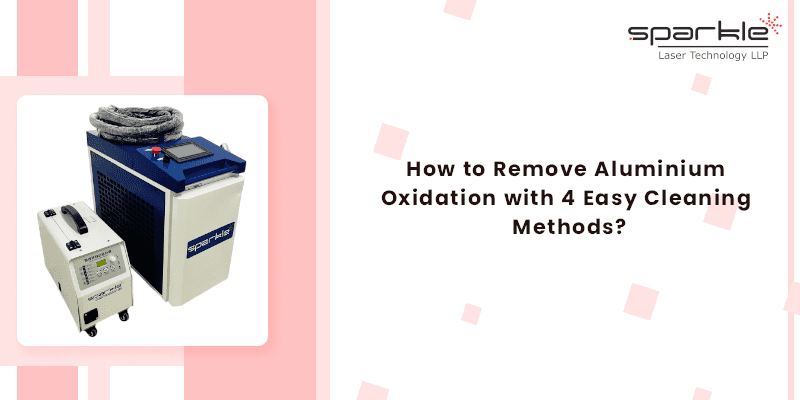
In cases where surface integrity is of utmost importance, laser cleaning has become a solution of choice. Laser cleaning is a non-contact process which uses a controlled laser pulse to remove oxidation instead of chemicals or abrasives.
The technique is a common practice in the manufacturing, automotive, and metal fabrication industries, where clean surfaces are a prerequisite for welding, coating, or assembly. The process is very selective in that it only removes the oxidation without affecting the base metal.
If you’re curious how this works in real-world scenarios, there’s a detailed explanation available on the site that walks through how laser cleaning is used for metal surface preparation, including aluminium. You can also explore the section that explains the working principles behind modern laser cleaning machines, which highlights why this method is gaining popularity for oxidation removal.
Choosing the Right Method to Remove Aluminium Oxidation
The optimal approach varies depending on the extent of the aluminium oxidation and the subsequent use of the material. In the case of lightly oxidised aluminium, a mild treatment is sufficient, whereas industrial components are often cleaned with high precision to prevent surface damage.
Additionally, there is an informative article on the site that discusses how correct metal surface cleaning enhances metal durability and performance. This is directly related to the prevention of oxidation taking place again very quickly.
Preventing Aluminium Oxidation After Cleaning
Maintaining aluminium in a clean state is definitely less challenging than stripping it of oxidation once again. After cleaning, it is important to dry the surfaces, try to limit exposure to moisture, and apply protective finishes in order to slow down the oxidation process.
In industrial conditions, sophisticated cleaning techniques are generally followed by coating or welding operations to ensure the surface remains clean for extended periods.
Final Takeaway
Aluminium will oxidise; that’s a fact. However, it doesn’t have to be a constant battle with your household items just because aluminium oxidation is common. Ordinary methods from home will suffice for everyday things, and in the case of a professional environment, there are efficient cleaning technologies designed for that purpose.
By selecting the proper method, you will not only achieve a cleaner surface but also improve the function and extend the life of the aluminium parts.
FAQs
1. Is aluminium oxidation the same as rust?
No. Rust is specific to iron and causes deep structural damage over time. When aluminium oxidises, it creates a protective layer; however, the discolouration and surface performance may still be affected.
2. Can aluminium oxidation be permanently removed?
It is possible to remove oxidation, but aluminium will inevitably oxidise again if it is exposed to air and moisture. Proper cleaning and protection will help in slowing down the rate of reoxidation.
3. Why is laser cleaning preferred for aluminium in industries?
It is because the process removes oxidation without the use of chemicals or abrasives, which makes it the perfect method for precision parts and surfaces that have to be left intact.