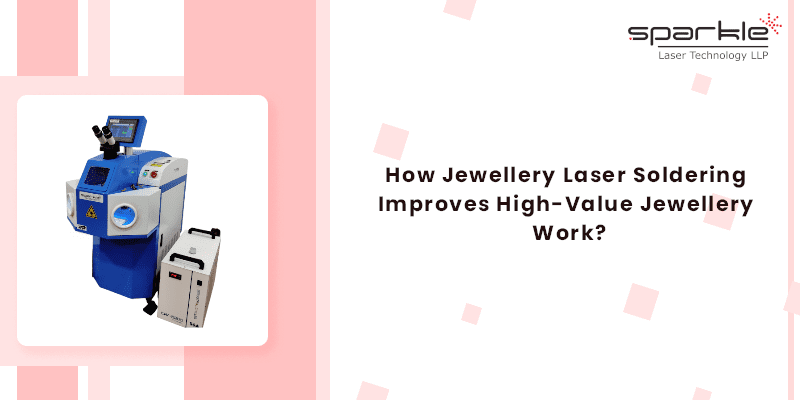
Luxury jewellery has always had a high value not just because of the materials used but also as a representation of milestones, memory, craftsmanship, and sometimes a significant financial investment. A luxury jewellery piece can be a diamond engagement ring, or a custom-made designer piece. These high-value pieces require the utmost precision when repairing or altering.
For many years, conventional techniques for soldering jewellery have been used as the industry standard. These traditional techniques, although they are effective when used properly, can be potentially risky especially when working with delicate settings, rare gemstones or complex designs.
Jewellery laser soldering has changed the face of the jewelry industry in recent years by changing the way it is created and repaired. Some of the significant changes include conserving the integrity of fragile stones and providing absolutely consistent accuracy. In addition, this new method of soldering is raising the standard for quality and safety in the repair and manufacture of jewelry.
Let’s explore!
Limitations of Traditional Jewellery Soldering
The traditional torch-based method of soldering jewellery has been beneficial to the industry for decades but when it comes time to work with fragile and expensive items, some limitations become obvious.
1. Heat Distribution is Too Wide
The conventional method distributes way too much heat to large sections of the pieces of jewellery. This can:
- Hurt sensitive stones due to the amount of heat applied to them.
- Weaken the prongs that hold stones in the settings, making them more prone to breaking.
- Warp thin designed pieces of jewellery.
- Change the colour of the metal used to make the piece of jewellery.
When soldering gold jewellery, especially higher carat gold, controlling the amount of heat applied to the gold is much more critical because it is more susceptible to deformation from heat than other metals.
2. Stones Need to Be Removed Prior to Repairing
In many instances, stones need to be removed from the jewellery prior to being repaired. This has a couple of negative consequences:
- More labor time directly increases the overall repair cost.
- Always increases the risk of cracking stones.
3. Oxidation and Fire Stain
When exposed to high heat, either silver or some gold alloys will develop a fire stain. Depending on how much heat is used, no solder will eliminate this type of oxidation.
In order to get rid of the oxidation on the silver or gold, you will likely have to do extensive polishing on the metal and this will ultimately reduce the overall thickness of the metal, which is not ideal for heirloom jewellery.
Advanced Techniques Required for High Value Jewellery
Some of them include!
Financial Value
- Large diamonds
- Rare gemstones
- Designer/Branded Collections
- High carat gold or platinum
A small mistake in making a repair can be a significant financial loss.
Structural Complexity
Modern luxury designs include:
- Micro-pave settings
- Thin, delicate prong settings
- Intricate filigree
- Mixed materials
Because these types of designs are more intricate than standard soldered jewellery designs. They require more precision in their creation, and this will be in the range of 1/1000 of an inch (mm).
Benefits of Laser Soldering for High Value Jewellery
Extreme Precision
The jeweller can use a magnifying system to work on fine jewellery at the specific point where energy is needed to create a solder bond. This makes laser soldering ideal for the following applications:
- Retipping prongs.
- Retipping diamond mounted settings.
- Repairing finely constructed chain links.
- Working in tight locations between stones.
When working with laser soldering, the laser beam can be less than 1/1000 of an inch in width or diameter.
Minimal Exposure Time to Heat
The greatest benefit of laser soldering is the heating of only the specific area being worked on and keeping all areas adjacent to that area cool. This allows for:
- Diamonds do not need to be removed.
- Past repaired gemstone integrity.
- Prong structural integrity is maintained.
- Minimal distortion to the inlay material.
Zero Fire Staining and Oxidation
In traditional silver making, you typically find oxidation on the silver. However, with silver laser welding, the concentrated energy reduces the amount of oxidation.
This leads to:
- Cleaner repairs.
- Needing less polish.
- Maintaining the thickness of the metal.
Strong Joints
Gold laser welding will provide an extremely strong joint through its detailed, precision joint.
When you laser weld, you get:
- High tensile strength
- Reduced porosity
- Solid joints
Having these durable joints will be an important consideration for areas of high i.e., ring shanks, clasps etc.
Quicker Turnaround
Due to the fact that actual stones remain in the same position, and minimal cleanup is performed:
- Repairs can be performed quickly.
- Less overall labour cost.
- The consumer will receive their goods quicker.
Investing in the use of a micro laser soldering or welding process will greatly improve workflow for the jeweller.
High Aesthetic Appeal
Luxury clients expect everything to emerge as close to perfect as possible. Because of the laser soldering process, you can get:
- Jewellers can work on specific areas of the metal to be soldered, while maintaining the polish or texture of the adjacent areas.
- Almost invisible soldering.
- Maintained engraving.
- Maintained original design integrity.
Applications of Laser Soldering in the Jewellery Industry
Some of the applications of laser soldering include the following!
Prong Repair and Retipping
Loose stones are one of the most frequent problems encountered with jewelry repairs. Laser soldering allows jewelers to reshape prongs without removing the stone. Thus, providing a secure setting for the stone, reducing risk, and expediting the repair process.
Ring Resizing Without Removing Stones
Conventional resizing methods often require jewellers to remove stones that may be heat-sensitive to resize the ring. However, using laser soldering, many ring sizes can be changed while the stones remain on the rings.
Fine Chain Repairs
The use of torch methods for repairing delicate chains is exceedingly difficult. Laser selective soldering allows the jeweler to professionally and cleanly attach microscopic links of chain.
Antique and Heirloom Restoration
Most antique pieces are extremely fragile. Laser soldering allows a jeweler to effectively re-enforce worn areas or repair cracks without compromising the structural integrity of the piece.
Mixed-Metal Jewellery
The soldering of mixed-metal jewelry such as two separate pieces of gold, platinum, and silver has historically presented challenges for traditional soldering methods. The jeweler can now use laser soldering to effect precise control of energy on each of the metals thus successfully soldering them together.
Traditional Soldering vs. Jewellery Laser Soldering
| Feature | Traditional Jewellery Soldering | Jewellery Laser Soldering |
| Heat Spread | Wide heat zone | Highly localized |
| Stone Removal | Often required | Rarely required |
| Risk of Fire Stain | High (especially silver) | Minimal |
| Precision | Moderate | Extremely high |
| Cleanup Required | Significant | Minimal |
| Ideal for High-Value Work | Limited | Excellent |
Advantages to Jewellers
Investing in laser welding equipment isn’t just about the technology, it’s also about building a reputation.
- Increasing Customer Trust
When customers trust an expensive item to a jeweller, they tend to feel better when they see that jeweller has utilized advanced technology.
- Value Added Service
Jewellers can charge more for laser developed repairs than for conventional type repairs because of the intricate and safe nature of the laser welding.
- Less Liability
Less removal of gemstones means less opportunity for a jeweller to be liable for damages or have claims made against them.
- Competitive Edge
Jewellers with laser welding capabilities have an advantage over competitors.
Drawbacks of Laser Welding
Although laser welders are very powerful tools, they are not for everyone. Examples of situations where laser welders may not be ideal include, but are not limited to:
- Large structural joints.
- Thick industrial metals.
- Very cost-sensitive repairs.
Nevertheless, for delicate, high-value, items, the advantages provided by using a laser welder far outweigh any drawbacks associated with the use of a laser welder.
Conclusion
In fine jewelry, accuracy matters. Originals and high-value jewelry, such as diamond engagement rings, bracelets, designer pendants, and fine pave pieces, are repaired using repair methods that can secure both the economic value of the item as well as the emotional value associated with the item. Repairing jewelry using soldering is the traditional method supported by the industry, but these methods have limitations when it comes to repairing delicate, high carat, or gemstone heavy pieces.
By utilizing highly focused heat, jewelry laser technology produces much cleaner and stronger joints. Jewelry laser soldering is available in a number of ways, including gold laser soldering for high-carat gold rings.
Silver laser soldering for silver pieces that are susceptible to oxidation, but most importantly, provides a strong, durable joint while maintaining the original aesthetics of the piece. Through the application of micro jewelry laser soldering equipment, jewelers are able to create ultra-precise repairs that may have previously been considered too complex or risky to attempt.
Using the best available solder for making jewelry means that even the best solder will not produce the results that are obtainable using the precise, selective soldering method provided by laser technologies. For high-value jewelry, even the slightest error in repairing the jewel may cause the loss of gemstones, thinning of metal, or detracting from the piece’s original appearance.
Establishing the highest level of peace-of-mind for customers of high-value jewelry is one of the many benefits provided by using laser soldering technologies. Jewelry businesses investing in laser soldering services will benefit significantly by establishing a higher level of trust with customers, and provide faster service.
FAQs
1. What is jewellery laser soldering?
Jewellery laser soldering is a precision repair technique that uses a focused laser beam to join metal components. Just like traditional torch-based jewellery soldering, it applies highly localized heat, reducing the risk of damaging gemstones or surrounding metal. It is especially useful for delicate, high-value jewellery pieces.
2. How is laser soldering jewelry different from traditional soldering jewelry?
Traditional soldering jewelry uses a flame to heat a larger area until solder melts and flows into the joint. This can affect nearby stones and metal.
In contrast, laser soldering jewelry:
- Targets a microscopic area.
- Minimizes heat spread.
- Eliminates the need to remove stones.
- Reduces oxidation and fire stain.
- Produces cleaner, stronger joints.
Laser technology provides greater control and precision, especially for intricate designs.
3. Is laser soldering safe for diamonds and gemstones?
Yes, in many cases. Because laser soldering jewellery uses concentrated heat in a very small area, surrounding gemstones often remain safe. Diamonds typically tolerate the process well due to their heat resistance.
However, extremely heat-sensitive stones still require careful evaluation by an experienced jeweller.
4. Can laser soldering be used for gold jewellery?
Absolutely. Gold laser soldering is one of the most common applications. It is especially beneficial when soldering gold jewelry with:
- High-carat gold
- Thin prongs
- Stone-set rings
- Intricate details
Laser precision prevents unnecessary softening or distortion of surrounding gold.