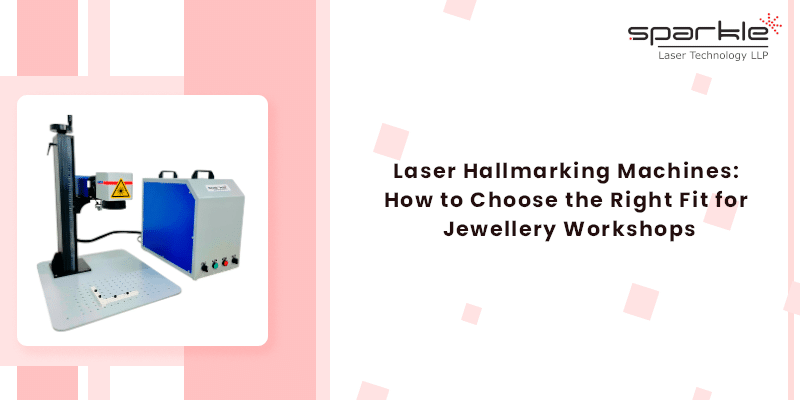
For jewellery makers, the act of marking pieces is definitely not only about branding; it is also about the trust, authenticity, and adherence to the industry standards. In case you are making fragile rings or powerful statement necklaces, each item that goes out of your workshop is a kind of your story, and hallmarking is one of the chapters in it.
Initially, a great number of artisans relied on stamps, acid marks, or conventional engraving methods to identify their works. Although these methods had their time, they were usually accompanied by some disadvantages, such as damaging the surface, making inaccurate marks, or inconsistency of the marks. At present, laser hallmarking machines offer a far superior way of jewellery marking with accuracy, the ability to control, and the feature being permanent.
But how do you choose the right machine for your workshop? This guide walks through the key considerations, from materials to workspace setup, so you can make a confident choice!
Why Laser Hallmarking Matters in Jewellery Making?
Before jumping into how to choose a machine, it’s worth understanding why laser hallmarking has become so valuable.
Apart from meeting the requirements, hallmarking gives peace of mind to customers that the product they are purchasing is real. Buyers today are more knowledgeable than ever. Recent market research shows that more than 60% of jewellery consumers view authenticity marks as the most important factor in their purchase decisions. This means that obvious and trustworthy hallmarks not only help in compliance but also in business.
Lasers provide a contemporary way which does not have the typical problems of old methods, such as uneven depth, surface damage, and limited design changes. With them, you get neat, lasting marks which can be your hallmarks, logos, serial numbers, or even decorative lines or patterns.
What Makes Laser Hallmarking Different?
At its essence, laser hallmarking uses a concentrated beam of light to create marks directly on the metal’s surface. The laser is not a method which presses into the material like conventional ones. Rather, it vaporizes an extremely thin layer of metal to create the most accurate character or symbol.
It has a number of advantages:
- Minimal heat impact – Less chance of discolouration or warping.
- No physical contact – The surface is free from scratches or dents.
- Highly repeatable – A great feature for batch work or serialised marking.
- Fine detail capability – A great feature for delicate pieces or tiny marks.
Such accuracy, precision to the point, is very significant in jewellery, the place where aesthetics and value come together.
Key Factors to Consider When Choosing a Laser Hallmarking Machine
Let’s look at the major points you should keep in mind when selecting a laser hallmarking solution for your workshop!
1. What Materials Will You Mark?
Jewellery uses a wide range of metals, from gold and silver to platinum, titanium, and brass. Different metals respond differently to laser energy:
- Gold and Silver: Highly reflective and relatively soft, making them ideal for low-power, high-precision marking.
- Platinum: Tougher to mark, often needing slightly more power or specialized settings.
- Titanium: Requires precision to avoid surface discolouration.
A good hallmarking system allows you to adjust laser settings easily for each material. This ensures marks are clear and consistent, whether you’re working on a delicate bracelet or a thick band.
2. Spot Size and Precision
Spot size is the laser beam diameter on the surface. A lesser spot size enables a more detailed and finer type of marking, which is highly beneficial for small rings and intricate designs to be made. If your workshop is making jewellery with micro details, then it is better to go for a machine that has small spot capabilities and high resolution.
Precision is not only about the beauty of the thing but also about the readability of it. Hallmarks should be very clear even when viewed through a loupe or magnifying glass, and the right positioning becomes more important when you have to make your marks in the tight spaces of a fragile piece.
3. Power and Control Features
Laser power influences the depth and visibility of the mark:
- If the laser power is too low, the mark may be barely visible or made in an inconsistent way.
- If the laser power is too high, the metal surface may discolour or warp.
It is better to select a device that has a variable power range and adjustable frequencies rather than one with fixed settings. This allows the laser output to be adjusted to the metal thickness, its reflectivity, and the depth of the mark without resulting in any kind of damage.
Control features like pulse duration, speed adjustment, and focus control are capable of assisting a great deal in achieving similar performance results for various items.
4. Size and Workspace Compatibility
Not only the size but also the workflow of the workshops differs. A small benchtop machine might be perfect for a boutique jeweller creating limited runs or custom orders. Larger studios or production floors, for instance, could take advantage of units that have automated handling or built-in conveyor systems.
Think over these points before making a decision:
- The area available for the workbench
- The necessity for the device to be portable
- The origin of power and the need for ventilation
- How many pieces of work will you be able to do in a day?
Choosing the correct one will make the device work with you rather than against you, and thus, your workflow will be smooth.
5. Ease of Use and Learning Curve
The most excellent tool in the world will not be of much help if it is too complicated to operate. Consider systems that have:
- Intuitive user interfaces
- Preset marking patterns
- Easy import of custom logos or serial numbers
- Clear focus adjustment
There are a few machines which also allow you to create the marks through the software and then send the jobs directly to the laser unit. In case you don’t have a technician who takes care of your workshop, choosing a user-friendly design will definitely spare you time and irritation.
6. Safety Features
Lasers can be considered as a source of power that can bring devastating consequences to humans if they are not properly handled. Some of the means to ensure their safety may be:
An area where the work is done is enclosed, or a shield is used:
- Emergency stop switches
- Guidelines for the use of protective eyewear
- Provision of ventilation or fume extraction
These components are designed to protect the user as well as the people in the surroundings, especially in the cases when metals are marked, which can lead to the release of very small metal particles.
7. After-Sales Support and Training
Even with a user-friendly machine, learning the best marking techniques takes time. Ask vendors about:
- Training sessions
- Online resources or tutorials
- Spare parts availability
- Warranty coverage
- Local service and support
Good support ensures you get consistent results and minimises downtime.
What You Can Mark with a Laser Hallmarking Machine?
Laser hallmarking isn’t limited to just traditional stamps or purity marks. With modern systems, you can extend your products by:
- Logo engraving
- Serial numbers for authentication
- QR codes for digital verification
- Decorative patterns or textures
- Personalised customer messages
Such flexibility can set your workshop apart as a unique brand, particularly in the case of bespoke pieces or limited edition collections.
Real-Life Use Cases That Highlight Benefits
Fine Rings and Bracelets
Tiny surfaces require sharp and clean marks. Lasers achieve this without damaging the metal by scratching or denting.
Luxury Collections
Various types of marks are usually required for an expensive product: purity, logo, unique ID and sometimes even branding elements. Laser systems take care of all of them in a consistent manner.
Batch Processing
In case you are manufacturing a series of the same products, laser hallmarking will make the set uniform, which is something that a hand engraving hardly can.
Budgeting: Balancing Cost and Value
Picking a suitable laser hallmarking machine is not about selecting the most costly one. Consider value over time instead:
- Is it reducing the reworking of pieces due to bad marks?
- Will it be able to save time if compared to manual engraving?
- Can it be able to manufacture all the materials you are using now?
- Is it sufficient to adapt future product lines?
A machine, when it is capable of giving you marks of a consistent quality without any damage and that does not require excessive training or maintenance, is a machine that will show its value shortly.
Real Voices from Workshops
Craftspeople who adopted laser marking often say things like:
“It’s like switching from handwriting to printing; the difference in clarity and consistency is night and day.”
That sentiment captures why many jewellery professionals consider laser hallmarking a game-changer.
Final Thoughts
Choosing a laser hallmarking machine for your jewellery workshop may feel like a big step, but it’s one that pays off in precision, reliability, and customer trust. Consistent identification that maintains surface quality and raises brand value is what you achieve with the right machine.
Keep the main points in mind:
- Understanding your material requirements
- Seek for accuracy and power regulation
- Compare machine dimensions with your area of work
- Give first place to safety and user-friendliness
- Put a premium on support and training in the long run
If you follow these rules, you will be close to choosing a system that meets both your artistic objectives and business requirements, thus allowing you to make sure that every item is stamped with the quality mark it is entitled to.
FAQs
1. Are laser hallmarking machines suitable for delicate jewellery designs?
Yes, laser hallmarking machines are perfect for fragile jewellery. They employ a non-contact method, which means the metal surface is not indented or rubbed. Therefore, fine and detailed marks can be made without the design or finish of the jewellery being changed.
2. Can a laser hallmarking machine mark different precious metals?
Laser hallmarking machines are capable of marking various precious metals like gold, silver, platinum, and even alloys. By using adjustable settings, one machine can work with different materials while still producing clear and permanent markings.
3. Is laser hallmarking better than traditional stamping methods?
As compared to the traditional stamping, laser hallmarking is more precise and consistent and does not cause any physical harm to the jewellery. Besides, it provides more options, e.g., the addition of logos, serial numbers, or micro text, which is hardly possible by manual methods.