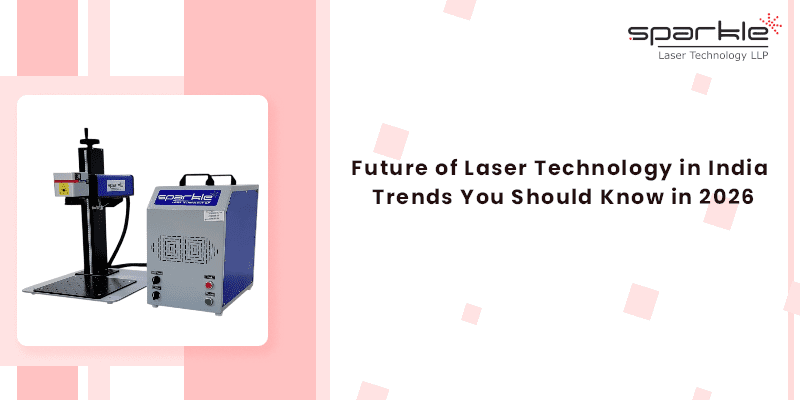
When walking through a modern manufacturing facility, there is one repetitive theme emerging across the entire geography, out with the old bulky legacy-cutting machines, in with the new sleek precision-engineered machines using industrial lasers, and that India continues to embrace rapidly. This isn’t simply a fashion or fad, but rather a global transformation in scope and scale by 2026.
The laser market in India has surpassed $2.16 billion in 2021 and is currently experiencing an astonishing CAGR of 17.92%, nearly three times the average global growth rate for this technology. The next generation of advanced laser technology represents an unprecedented opportunity for manufacturers of all types and sizes throughout the country.
If you are a manufacturing operator, or other business leader who has observed this transformation from a distance, consider the year 2026 your cue to begin participating.
Why is India’s Laser Market Exploding Right Now?
A multitude of factors have converged at the same moment in history to provide a perfect foundation for developing laser technology in India. These factors assist companies in their ability to make wiser investment choices.
One factor is that the Production Linked Incentive (PLI) plans have provided billions of dollars in funding for manufacturers of electronics, automotive equipment, and medical devices, all of which account for a significant portion of the users of laser marking machine India solutions.
The 7 Laser Technology Trends You Cannot Ignore in 2026
From AI-powered beam direction to handheld welding machines changing the way businesses operate, these are the seven main trends impacting the Indian laser market this year.
1. Dominance of Fiber Lasers
As of today, fiber lasers represent 40.95% of the Indian laser market and growing. Fiber lasers offer higher wall-plug efficiency, zero maintenance, and high beam quality, three things that CO₂ and Nd:YAG laser systems do not have. Manufacturers in India are rapidly upgrading their technology, while those who delay are already losing business productivity. Whether having a fiber laser marking machine that marks traceability codes on automotive parts, or cutting thick pieces of metal with high-power fiber laser machines, fiber lasers are now the default technology throughout every industry.
2. UV Lasers are Opening Up New Applications
Although fiber systems hold a large market share by volume, uv laser machine technology is gaining a smaller share of the circle. UV laser machines help produce markings for lower thermal tolerance materials (glass, ceramics, plastics, flexible circuits) than possible with either CO₂ or Nd:YAG lasers.
UV laser applications are rapidly increasing in India in a variety of markets (ie. serialisation requirements on pharmaceutical packages, marking of PCBs in electronics, and packaging/wrapping luxury products).
3. AI Integration is Making Laser Systems Smarter
What does the next generation of industrial laser machines available in India offer? In addition to powerful capabilities and features, they also offer enhanced AI capabilities that include real time beam shaping and predictive maintenance alerts.
In addition, IoT connectivity allows for real time data transfer from laser systems directly to factory management systems, which reduces the amount of time that machines are not in operation, resulting in increased product quality consistency. It is estimated that the global market for AI-powered lasers will reach $6.45 billion by 2033.
As part of this growth, Indian OEMS have begun to integrate AI technology into their laser systems. Therefore, when calculating ROI, laser buyers now have to include data in addition to just machine output.
4. Laser Additive Manufacturing is Moving From Lab to Factory
Laser 3D printing is no longer just a lab-based research project. The aerospace and defence sectors of India are utilizing laser sintering and powder-bed fusion to manufacture lightweight components that are not feasible to manufacture through traditional machining. The global market for 3D laser printing is expected to reach $12.69 billion by 2033; defence contractors and Tier-1 automotive suppliers in India are amongst the first entities to be developing this capability in India.
5. Handheld Lasers Are Opening New Paths for SMEs
Portable hand-held laser welders now available up to 2kW are changing the way manufacturers use lasers in India’s burgeoning small and medium-size enterprise sector.
The cost of acquiring these hand-held units has decreased significantly and the barriers to entry are at all-time lows. The open access to fiber laser technology is one of the least reported-on trends in the Indian manufacturing scene at this time.
6. Medical & Cosmetic Laser Applications Are a Huge Growth Opportunity
The expanding medical sector is also the lone fastest-growing segment in terms of end-user activity within the overall Indian laser market, with anticipated growth at an annual average compounded rate of 18.31%. Consequently, government PLI (Production-Linked Incentive) incentives for manufacturers of medical devices are resulting in a domestic manufacturing boom in surgical, ophthalmic and dermatologic equipment.
The large and growing patient population in India, coupled with a growing awareness of various aesthetic treatments, has resulted in increased demand from Indian manufacturers of high-quality laser engraving machines for use in the OEM healthcare segment. The total global market value for laser skin rejuvenation alone is projected to reach USD 3.05 billion by 2033, and India will have a share!
7. Green Manufacturing is Pushing Laser Over Legacy Alternatives
One advantage of using laser manufacturing over other traditional methods is the amount of waste produced. In fact, using lasers to cut and weld, results in significantly less waste than using mechanical, plasma and waterjet technologies.
Another benefit of using lasers to manufacture other products is the overall energy efficiency of laser systems because they use less power to work than do traditional methods. Therefore, for procurement teams who have been tasked with achieving sustainability targets, converting from traditional style of marking machines to those of lasers is becoming more of a compliance decision rather than just a performance decision.
Applications of Laser Technology
Knowing what industries that drive laser adoption will assist buyers in getting in front of the demand curve versus behind it.
Automotive and EV’s: The automotive and EV market comprises approximately 29.25% of the market as it is the largest percentage of revenue generator. Laser welding of EV battery packs (3-6 kW fiber scanner) is the hottest application. The manufacturers are supported by the PLI and are developing dedicated capex programs for laser lines.
Electronics and Semiconductors: With the recent influx of investments in Semicon India, the following applications are beginning to ramp up in their use of laser technologies like Laser wafer dicing, PCB labeling, and solar cell processing. As such, the Semiconductors laser sub-segment is expected to grow 10.4% CAGR in India.
Health and Medical Devices: The use of laser technologies in surgical tools, stent machining, and ophthalmic devices are all examples of industries requiring the use of ultra-precision uv lasers and are unable to be manufactured using traditional tooling methods. There is structural support (government incentives) and growth through the use of laser technologies in the medical industry.
Aerospace and Defense: The government of India’s commitment to being self-sufficient means a shift towards policy-driven domestic laser-based component manufacturing. The active procurement of high-power systems for structural component machining, optics for defense applications and parts for additive manufacturing will take place.
Textiles, Leather, and FMCG Packaging: CO₂ lasers play an integral role for Indian industry to continue to conduct business; using laser cutters to provide intricate cuts and also provide tamper-proof laser markings, which is increasingly becoming a requirement for export compliance.
Challenges Faced by Laser Technology
Here’s some of what India’s laser industry is authentically facing!
Shortage of Experienced Workers: There is a lack of operators available to run today’s advanced laser systems. While universities are establishing photonics labs, there continues to be a growing gap between the number of trained operators and the availability of advanced laser systems.
High costs for SMEs: Companies investing in high-powered lasers are still having to invest a significant amount of money to acquire the necessary equipment. While many contract laser service providers are available to help, there is no consistent coverage of providers across geographical locations.
Supply Chain Issues: The laser manufacturing industry is heavily reliant on imported gallium, germanium, and indium phosphide substrates, and thus has been affected by the many global semiconductor supply chain interruptions.
Complexity of Regulations: Class IV laser safety requirements and varying regulations at the state level are creating friction between first-time buyers trying to procure laser machines and manufacturers that have experience in the industry and can offer expert advice.
What Forward-Thinking Businesses Should Do Right Now?
Here are some steps forward-thinking companies can take!
- Switch from CO₂ or Nd:YAG to fiber laser systems. They are cheaper to operate than legacy systems, they have better beam quality and throughput. There is no sign of this gap in competitor performance closing any time soon.
- Take advantage of government subsidies and GST benefits before they expire. The amount of stimulation the government will provide depends on when companies invest in qualifying laser machines in India. The closer to 2026 the investment is made, the more subsidies an organization can take advantage of.
- Investigate using UV lasers for those applications requiring precision. Organizations producing products that contain glass, ceramic, flexible media or pharmaceutical packaging may benefit significantly from using a uv laser marking machine.
- Develop their own internal skill sets in laser operation. There is a considerable gap in the pool of available qualified laser operators; therefore creating a workforce with laser expertise will create a competitive advantage for suppliers who have invested in operator training prior to the peak demand expected in 2027–28.
- Look into contract laser services. Companies that do not want to own their own laser would benefit from the developing “laser as a service” model that is establishing itself in “Tier-2 cities” throughout India, as this model allows companies to get access to high-quality lasers without having to invest in an expensive piece of equipment.
Conclusion
The question is no longer whether India will adopt laser technology to improve its manufacturing capabilities; it has already begun. The question is whether you will be ahead of the curve or behind it.
When you consider everything from fiber laser marking machines in an automotive assembly plant to UV laser systems that delicately etch packaging for pharmaceuticals in a clean-room location, advanced laser technologies are everywhere across India today – growing rapidly and proliferating at an extraordinary pace. The laser industry will not wait for anyone; therefore, you must also not wait.
At Sparklelaser, we have helped Indian customers successfully navigate this journey from initial contact through installation to training and ongoing service after the sale for many years. We offer a complete line of both fiber laser and UV laser systems that are ideally suited for the needs of the Indian manufacturing sector durable, accurate solutions manufactured by disciplined professionals who know your operating environment well.