Industrial manufacturing is becoming increasingly competitive. Manufacturers today are under constant pressure to improve productivity, reduce operational costs, optimize floor space, and maintain consistent product quality. At the same time, businesses are expected to adopt advanced technologies that support automation, efficiency, and long-term operational flexibility.
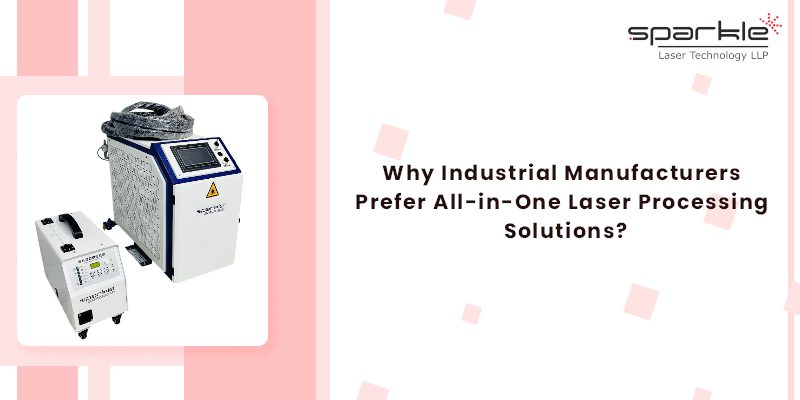
For many years, manufacturers relied on separate machines for welding, cleaning, cutting, and surface preparation processes. While these systems performed their individual functions effectively, they often required additional investment, increased maintenance, larger factory space, and higher operational costs. As manufacturing requirements continue to evolve, companies are now seeking integrated solutions capable of performing multiple operations within a single platform.
This shift has contributed to the growing popularity of all-in-one laser processing solutions. By combining multiple manufacturing processes into a single system, these technologies help manufacturers improve operational performance while reducing complexity. Across industries such as metal fabrication, automotive manufacturing, heavy engineering, industrial equipment production, and stainless steel processing, integrated laser systems are becoming increasingly important.
The Growing Demand for Manufacturing Efficiency
Modern manufacturing facilities are no longer focused solely on increasing production volumes. Companies are placing greater emphasis on improving manufacturing efficiency, reducing waste, and maximizing resource utilization.
Industrial manufacturers continuously evaluate how equipment investments affect operational performance over the long term. Purchasing multiple machines for different processes often results in increased installation costs, additional maintenance requirements, and higher operational complexity.
Integrated laser processing systems provide manufacturers with greater operational flexibility while simplifying production workflows. By reducing the need for multiple standalone systems, businesses can improve productivity while maintaining better control over manufacturing operations.
As market competition continues to increase, manufacturing efficiency has become one of the most important factors influencing equipment investments.
Industrial Automation Is Driving Technology Adoption
The rapid growth of industrial automation has significantly changed how manufacturers evaluate production equipment. Businesses increasingly seek technologies capable of supporting automated workflows while improving consistency and reducing human intervention.
Automation allows manufacturers to:
- Improve production consistency
- Reduce operational errors
- Increase production speed
- Lower labor dependency
- Enhance process control
- Improve long-term productivity
- Support scalable manufacturing
- Optimize operational costs
As manufacturers continue implementing automation strategies, integrated laser processing technologies have become valuable tools for supporting these initiatives.
Why Metal Fabrication Industries Prefer Integrated Solutions?
The metal fabrication industry operates in an environment where speed, precision, and operational flexibility are essential. Fabricators often perform multiple processes during a single production cycle, including cutting, welding, cleaning, and surface preparation.
Traditionally, these processes required separate equipment installations, resulting in increased operational complexity and longer production times. Integrated laser processing systems help simplify these operations by allowing manufacturers to perform multiple functions within a unified workflow.
This approach reduces equipment movement, minimizes production interruptions, and improves overall manufacturing performance. For companies operating in highly competitive markets, these efficiency improvements can provide substantial advantages.
As fabrication requirements become more complex, manufacturers increasingly prefer technologies capable of supporting diverse operational needs.
Laser Welding, Cleaning, and Cutting Are Becoming More Connected
The growing adoption of laser welding, laser cleaning, and laser cutting technologies reflects a broader trend toward process integration. Manufacturers increasingly recognize that combining multiple capabilities within a single system improves operational flexibility and reduces equipment investment requirements.
Laser welding supports precision joining operations across various industrial applications. Laser cleaning helps remove contaminants, rust, paint, and oxidation without damaging underlying materials. Laser cutting provides accurate material processing with minimal waste.
When these capabilities are integrated into a single system, manufacturers benefit from improved workflow efficiency, reduced equipment downtime, and greater production flexibility. This combination allows businesses to respond more effectively to changing production requirements while optimizing operational performance.
Manufacturing Technology Is Reshaping Industrial Production
Advances in manufacturing technology continue to transform industrial operations throughout the world. Companies are increasingly investing in technologies capable of supporting digitalization, automation, and process optimization.
Modern manufacturing environments require equipment that can adapt to changing production demands while maintaining high levels of performance and reliability. As businesses adopt smart manufacturing strategies, equipment flexibility has become a major consideration during investment decisions.
Integrated laser processing technologies align with these objectives by providing manufacturers with scalable and adaptable production solutions. This flexibility allows businesses to respond more effectively to market changes while maintaining operational competitiveness.
The continued evolution of manufacturing technology is expected to further accelerate the adoption of integrated production systems.
Production Efficiency Has Become a Competitive Advantage
In today’s industrial environment, production efficiency directly influences profitability, competitiveness, and long-term business success. Manufacturers are increasingly evaluating equipment investments based on their ability to improve productivity while reducing operational costs.
Integrated laser processing systems contribute to production efficiency by reducing machine changeover times, minimizing maintenance requirements, improving workflow coordination, and optimizing resource utilization.
Manufacturers understand that even small improvements in production efficiency can generate significant long-term benefits. As a result, technologies that support operational optimization are becoming increasingly valuable across industrial sectors.
This focus on efficiency is one of the primary reasons why all-in-one laser processing solutions continue gaining popularity.
Heavy Engineering Industries Are Driving Adoption
The heavy engineering sector frequently requires multiple manufacturing processes throughout production operations. Components often undergo cutting, cleaning, welding, and surface preparation before final assembly.
Using separate machines for each process can increase production complexity and extend manufacturing timelines. Integrated laser systems help simplify these operations by providing greater flexibility while reducing equipment requirements.
Heavy engineering manufacturers increasingly recognize that operational efficiency, equipment utilization, and production flexibility directly influence competitiveness. This understanding has encouraged broader adoption of integrated manufacturing technologies capable of supporting diverse production requirements.
As industrial projects continue becoming more complex, demand for flexible manufacturing solutions is expected to increase further.
The Future of Industrial Manufacturing
The future of industrial manufacturing will continue to emphasize automation, operational efficiency, digitalization, and flexible production systems. Manufacturers are expected to invest more heavily in technologies that support multiple processes while reducing operational complexity.
Future manufacturing trends are likely to include:
- Greater automation adoption
- Increased manufacturing flexibility
- Enhanced operational efficiency
- Digital production integration
- Improved resource utilization
- Higher productivity expectations
Integrated laser processing solutions align closely with these objectives, positioning them as important technologies for the next generation of industrial manufacturing.
Conclusion
Industrial manufacturers continue seeking solutions that improve operational performance while reducing complexity and long-term costs. As manufacturing environments become increasingly competitive, businesses are prioritizing technologies that support automation, efficiency, flexibility, and productivity.
All-in-one laser processing solutions address these requirements by combining multiple manufacturing processes into a single platform. These technologies support metal fabrication, industrial automation, laser welding, laser cleaning, laser cutting, and overall production efficiency, giving manufacturers valuable operational advantages.
As industrial manufacturing continues to evolve, integrated laser processing systems will play an increasingly important role in helping businesses remain competitive, efficient, and adaptable.
Frequently Asked Questions
1. Why are industrial manufacturers adopting all-in-one laser processing solutions?
Manufacturers adopt these systems to improve efficiency, reduce equipment costs, and simplify production workflows.
2. How do integrated laser systems improve manufacturing efficiency?
They reduce machine changeovers, minimize downtime, and support multiple manufacturing processes within one platform.
3. Which industries benefit from all-in-one laser processing technologies?
Metal fabrication, heavy engineering, automotive manufacturing, industrial equipment production, and stainless steel processing industries benefit significantly.
4. How does industrial automation influence laser technology adoption?
Automation improves consistency, productivity, and operational control, making integrated laser systems more attractive.
5. Why is production efficiency important in industrial manufacturing?
Production efficiency directly affects profitability, competitiveness, and long-term operational success.