Permanent product identification is an essential requirement of manufacturing today. Manufacturing sectors like automotive, aerospace, electronics and medical devices require high-contrast durable markings to ensure traceability, brand identity, compliance with regulations, and protection against counterfeit products. Traditional marking methods, such as ink printing, stamping and chemical etching, generally do not provide the level of durability, precision or effective maintenance to meet the performance requirements of modern manufacturing.
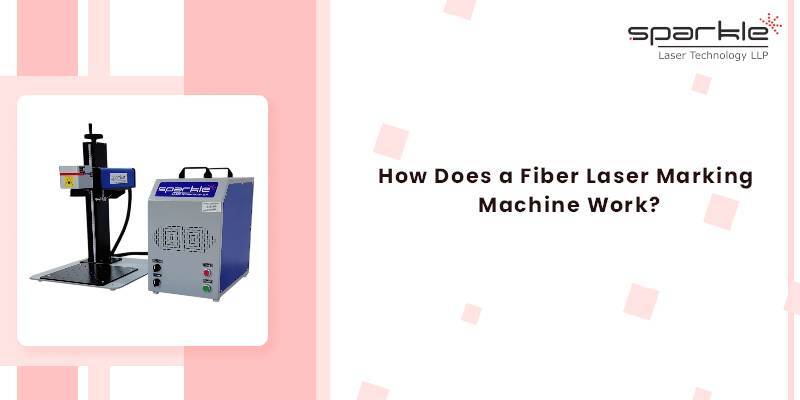
The commercially used fiber laser marking machines have changed the way manufacturers are using industrial marking technology. Fiber laser marking machines use highly concentrated laser energy to permanently change the surface of an object by creating a mark through no physical contact and the use of consumables. In addition, the mark created by a fiber laser marking machine is created in less time, and with more precision than traditional methods of marking.
In this article, you will learn how fiber laser marking technology works and why it has become the preferred choice of many manufacturers today. Let’s have a look at them!
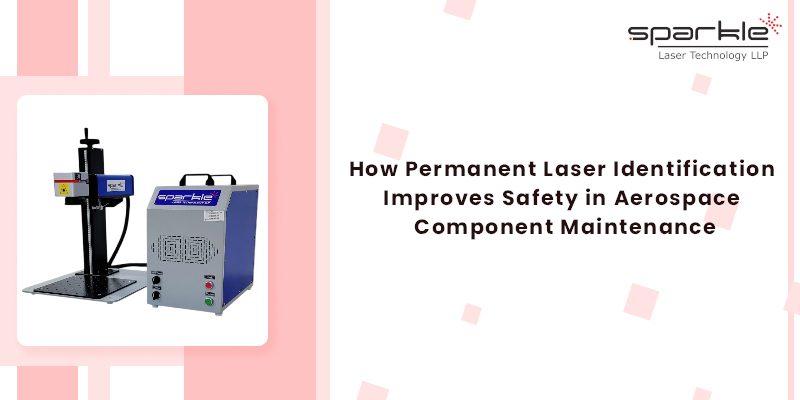
Core Components of Fiber Laser Marking Machine
To understand how a machine works one must know what the parts are made up of to help understand how it works as well. Basically, it includes!
Fiber Laser Power Source
The fiber power source is the core of the machine and creates a laser with a rare Earth dopant, through rare earth-doped fiber optical lines.
They convert:
- The fiber is pumped using pump diodes.
- Energy is emitted in the form of photons through stimulated emission.
- The emitted light is amplified within the fiber core.
The fiber produced is a wavelength of 1064 nm for marking metals, and some plastics due to its ability to penetrate strongly.
Advantages
- Stability
- Minimal divergence
- Strong penetration ability
- Low energy consumed
Galvanometer (Galvo) Scanning System
The Galvanometer scanning system consists of two fast-moving mirrors moving from side to side that deflects the laser beam on the two axis (X/Y) of the machine.
Purpose:
- To change from digital designs to physical motion.
- High speed marking.
- Accurate positioning.
The Galvo mirrors allow extremely fast marking speeds by moving at thousands of rotations per second.
F-Theta Lens
The F-theta lens through which the laser passes focuses on the part and allows for uniformity of the spot size on the marking area.
They determine:
- The size of the area to be marked.
- The diameter of the spot.
- The quality of resolution.
A properly chosen lens will allow for your industrial manufacturings to be consistently marked.
Software to Control Systems & Fiber Laser Marking
The fiber laser marking software is used as the operating interface for the machine, allowing operators of the machine to:
- Create their own graphics/text.
- Import their own vector files.
- Produce their own QR codes & serial numbers.
- Change marking parameters, such as power & speed.
- Convert graphics/text into vector paths for the Galvo system.
Cooling System
The fiber laser marking system resides in an air-cooled environment. Thus, the fiber systems create a smaller footprint than CO2 systems, their maintenance is less complex than CO2 systems, and therefore, are easier to maintain.
Operating Principle of the Fiber Laser Marking System
The operating principle of the fiber laser marking machine consists of four distinct phases in making lasers which are as follows!
Phase 1 – Laser Generation
The fiber laser generating equipment produces laser light by exciting the rare-earth doped ions in the fiber with the pump diodes. The light generated is all coherent in nature and highly concentrated.
Phase 2 – Beam Amplification
The fiber laser will amplify the light as the light travels through the doped fibre. The fibre is both the gain medium and waveguide, which results in an outstanding beam quality.
Phase 3 – Beam Steering
The Galvo mirrors will move rapidly to direct the laser to the surface per the request from the fiber laser marking software.
Phase 4 – Material Interaction
When the laser strikes a material, it creates high amounts of localized heat. Depending on how the fiber laser is set up, the heat could result in one of three different interactions with the material:
1. Removal of material (engraving)
2. Melting of the surface (etching)
3. Oxidation of the surface
These physical changes to the surface of the material allow the laser to produce high-contrast markings that last permanently.
Parameters Associated with Fiber Laser Marking
In order to produce high-quality results, it is important for operators to adjust their fiber laser marking machine parameters correctly.
Some of the key fiber laser marking parameters are:
1. Laser Power (%)
This parameter determines the amount of energy the laser beam produces.
The higher the laser power, the deeper the engraving. The lower the laser power; the shallower the surface marking.
2. Marking Speed (mm/s)
This parameter determines how fast the laser moves.
The faster it moves, the lighter the marking. The slower it moves, the deeper the marking.
3. Frequency (kHz)
This parameter indicates how many laser pulses are emitted each second.
The higher the frequency, the more uniformly finished the marking will be. The lower the frequency; the deeper the marking.
4. Hatch Spacing
This parameter determines the distance between the fill lines during engraving.
The closer together the fill lines, the darker the fill mark will be. The farther apart the fill lines, the lighter the fill mark will be.
5. Focus Adjustment
Adjusting the focus of the fiber laser is critical for obtaining a sharp mark and maximizing the concentration of energy on the target material.
Operators of a fiber laser marking machine can optimize the marking quality on various types of materials by balancing the above parameters.
Types of Marking Effects
1. Engraving – The material is completely vaporized, leaving depth as part of the marking process.
2. Etching – The surface is melted just enough to create contrast in color without having much depth.
3. Annealing – Oxidation occurs when heat is applied, creating a color change (typical on stainless steel).
4. Deep Engraving – Achieved through multiple passes.
Fiber Laser vs UV Laser
| Feature | Fiber Laser | UV Laser |
| Wavelength | 1064 nm | 355 nm |
| Processing Type | Thermal | Cold marking |
| Best For | Metals | Sensitive plastics |
| Speed | Very high | High |
| Equipment Cost | Moderate | Higher |
Uses of Fiber Laser Marking Machines
There are many different uses for fiber laser marking machines found within the various industries that utilize them. Let’s explore!
Automotive Industry
Examples include:
- VIN Numbers
- Engine Parts
- Transmission Parts
Electronic Component Industry
Examples include:
- PCB (Printed Circuit Board) Marking
- Micro-QR Code Marking
- Chip Identification
Medical Instruments
Examples include:
- Surgical Instruments
- Stainless Steel Medical Implants
- Compliance Marking
Aerospace Defense
Examples Include:
- Durable Part Identification
Consumer Goods & Jewellery
Examples Include:
- Customized company logos
- Personalized engravings
Since, fiber laser marking offers a permanent and wear-resistant mark, fiber lasers are used in traceability marking systems.
Advantages of Fiber Laser Marking Technology
- High Precision
- Long Lifespan
- No Consumables
- Low Maintenance
- High Speed
- Eco-Friendly
- Easy Automation Integration
Conclusion
A fiber laser marking machine creates permanent markings using a very high-energy laser beam to generate a precise marking using a high-speed galvo mirror to direct the beam through the fiber laser to focus the beam onto the surface of the material to be marked.
Manufacturers can optimize their results by maintaining their understanding of how a fiber laser marking machine works and adjusting marking parameters to their fiber laser marking machine.
After evaluating a fiber laser versus a UV laser, manufacturers will find that fiber lasers offer the lowest cost option for metal marking due to its ability to mark quickly, depth capability into the material and lower costs.
Companies that correctly set up and follow a fiber laser marking machine instruction manual will have the ability to maximize performance, reduce operation costs and maintain uniform quality for many years.
FAQs
1. How does a fiber laser marking machine work?
A fiber laser marking machine generates a high-intensity 1064 nm laser beam through a fiber laser power source. The beam is directed by high-speed galvanometer mirrors and focused onto the material surface, where controlled heat alters the surface to create permanent marks.
2. What is the process of laser marking?
Laser marking is a non-contact process where a focused laser beam interacts with a material’s surface to engrave, etch, anneal, or discolor it. The marking result depends on laser parameters such as power, speed, frequency, and focus position.
3. What can a fiber laser mark?
Fiber lasers primarily mark metals such as stainless steel, aluminum, brass, copper, and titanium. They can also mark certain engineering plastics and coated materials with high precision and durability.
4. How does a fiber laser engrave metal?
A fiber laser engraves metal by concentrating intense heat on a small area, causing the material to vaporize or melt. By adjusting power and speed settings, the laser removes layers of metal to create permanent, deep engravings.
5. Which is better, CO₂ or fiber laser?
Fiber lasers are better for marking and engraving metals due to their 1064 nm wavelength and high beam quality. CO₂ lasers are more suitable for non-metal materials like wood, acrylic, glass, and leather.