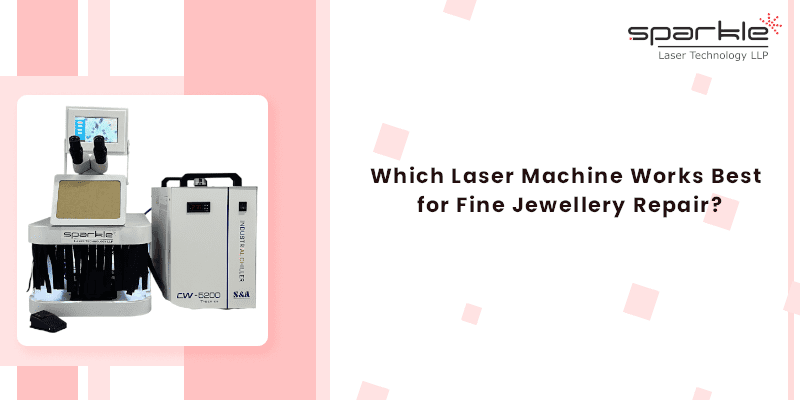
Jewellery laser welding is a method of welding metals at a low temperature by using a focused and highly-concentrated beam of light to combine two metal surfaces together. Just like the traditional method of torch welding, in which a jeweller uses a torch to heat the entire ring or chain to a specific point. Then, it melts the metal into place during the process of torching, using a Jewellery laser welding machine that allows the jeweler to deliver energy to the metal in precisely controlled pulses. This results in extremely precise fusion of metals at a very specific location with minimal transfer of heat to surrounding areas.
Additionally, the laser only focuses on a very small area to create the weld. Because of this accuracy, the jewellers can produce clean and strong welds with no effect on the surrounding area. Therefore, the use of a laser welder for jewelry repairs has become a necessity in the modern jewelry repair shop.
Today’s sophisticated systems enable jewelers to:
- Re-tip prongs without having to remove gemstones.
- Restore delicate filigree.
- Resize rings with minimum discoloration.
- Produce seamless laser-soldered jewelry
The advent of laser technology has turned the repair of jewelry with lasers from being a specialized service to being accepted as the gold standard method of repair among the highest-quality jewelry repair shops.
Why are Lasers Essential for Fine Jewelry Repair?
Fine Jewelry usually includes:
- Highly valued precious metals such as platinum and gold.
- Very delicate gemstones.
- Handmade, detailed pieces.
Regular soldering typically introduces such high temperatures that:
- A stone may crack or burn.
- A metal will often discolour.
- The metal will become weak structurally.
- Damaged antique pieces will be created.
Laser Jewellery Repair Machines create most of these types of risks due to their ability to accurately pinpoint the location of the item being repaired while transferring very little heat, therefore reducing the risks associated with repairing, providing a quicker repair process and a more enjoyable repair experience.
Let’s check in detail!
What Makes a Laser Machine Ideal for Repairing Jewellery?
Not every laser system is the same. When selecting a laser jewelry repair machine, various technical and practical features need to be taken into consideration.
Power & Pulse control
A jeweler can use adjustable power settings to help him/her:
- Make a micro-weld with minimal melting when welding a thin chain.
- Make a micro-weld on a heavy platinum band.
- Control the amount of time the laser has applied energy by using pulse control.
In general, systems of 60W-200W are ideal for most fine jewelry repairs.
Spot Size Precision
Spot size refers to how well the laser beam is focused. The smaller the spot size, the greater the accuracy, the less heat impact, and the greater invisibility of the beam. This is very important when performing laser welding on pave or micro-prong settings.
Cooling Systems
- Improve consistent performance over a long period of time.
- Extend the length of time that the machine performs properly.
- Result in acceptable weld quality.
The laser machines generate heat internally, a good cooling system will:
Most professional jewellery laser welding machines operated with either air or water-cooled systems.
Comfort and Ergonomics
The following features improve user experience with a laser welder:
- Ease of microscope positioning
- User-friendly digital display
- Foot control
- Adjustable forearm supports
A good jeweller’s laser welding machine will increase productivity by reducing the amount of fatigue caused by using the machine.
Safety Features
It is important to follow safety procedures when working with high-powered laser equipment. In order to ensure your safety while using the welding machine, you should look for features such as:
- Laser-safe enclosures
- Laser safety glasses
- Emergency shut-off
- Proper ventilation
The laser welding machine used for jewellery repair should meet all required international safety standards.
Compatibility with Precious Metals
When searching for an appropriate welding system, you should check that it works effectively with:
- Yellow, white and rose gold
- Platinum
- Silver
- Palladium
A quality gold laser welding machine will need to be able to weld reflective metals without losing energy during the welding process.
Safe Welding Modes for Stones
Some superior welding systems come equipped with special settings for:
- Low-temperature prong repairs.
- Safely pulsed gemstone welding.
This ability allows for faster and safer welding of jewellery pieces that contain gemstones.
Different Types of Laser Machines for Jewellery Repair
When investing in laser machines, it is important to know the different types of lasers.
a) Nd:YAG Lasers
How it works:
Nd:YAG lasers operate as a laser that produces pulses of bright, high-energy light to accomplish accurate metal welds.
Nd:YAG lasers have been used as the standard in repairing jewellery with a laser for many years.
Ideal to Use during: Chain repairs, Prong re-tipping, Ring resizing, Crack Filling.
Advantages:
- Proven reliability.
- Performs well with Gold and Platinum.
- Most used type of laser for soldering jewellery.
Disadvantages:
- Higher maintenance.
- Slightly less efficient than fiber systems.
b) Fiber Lasers
A fiber laser uses fiber optical cables to transfer energy with greater efficiency.
Modern workshops use these lasers and they are often contained within a multifunction machine that can also serve as a Fiber laser engraver jewelry system.
Advantages:
- More efficient
- Easier to maintain
- Longer lasting
- Faster welding rates
Fiber lasers are often viewed as the future of Laser Welding Machine Jewelry technology.
Typical Applications for Repair
- Fine gold repair
- Seam welding
- Detailed reinforcement of structure
- Combined engraving and repair
c) Diode lasers
Diode lasers are small, affordable, and readily available. Compactness and affordability is their attraction to small studios.
Portable, affordable, economical to set up, and easy to store.
Suitable applications include light repairs, small pieces of gold jewellery, and a studio that is just beginning to use lasers for jewellery repair.
However, Nd:YAG or fibre systems usually have more capability for larger-scale platinum work, or more difficult repairs.
Top Laser Welding Machines for Jewellery
| Brand/Model | Laser Type | Key Features | Ideal Use |
| Model A | Nd:YAG | Adjustable pulse, fine spot control | Chain link repair |
| Model B | Fiber | Fast welding, low heat | Gem-safe repairs |
| Model C | Nd:YAG + Fiber Combo | Best of both | All-around jewellery |
| Budget Option | Compact Nd:YAG | Beginner friendly | Small shops & startups |
Selecting the Appropriate Machine for Your Workshop
Choosing to invest in a laser welder for jewellery is more than just a purchase. It is an investment in your craft that has the potential to increase your production efficiency, reduce your repair time and provide you with a higher return on your investment (ROI).
Selecting the wrong machine, however, can take away some of your potential services from your arsenal and reduce your potential ROI.
Here is a list of things you should take into consideration prior to purchasing a laser welder for jewelry repairs:
Questions to Ask Before You Purchase Your Laser Welder
You need to take a realistic view of your workshop before making any laser welder purchase:
1. What are the types of metal you work with?
The response of different types of metals when treated with a laser can vary greatly.
Platinum – Requires a greater amount of power as well as pentration to fully bond.
Gold (Yellow, White, or Rose) – Requires precise control over the pulse duration to prevent discoloration. An ideal jewellery laser welder model for working on gold should have the capability to adjust the energy level delivered by the laser.
Silver – Highly reflective and conductive, it requires a laser with stable, high power.
Palladium and Mixed Alloys – Require fine spot size control and flexible wave length adjustment.
If you specialize in platinum and high-quality custom work, it is worth investing in a high-performing jewellery laser welding system. When performing repairs on gold chains or prongs, you should be able to use a mid-tier unit.
2. What is your budget?
The price ranges for laser systems can vary widely:
Entry-level systems: Designed for new businesses entering into the laser jewellery repair industry, typically much less expensive than a professional system.
Mid-range professional systems: Designed for jewellery professionals who want the right amount of power and precision.
3. What are the requirements for portability?
Workshops can feature:
Portable units for exhibitions and shared studios.
Compact desktop machines.
A compact fiber laser engraver jewellery setup with welding capabilities could be a good choice if space is limited. Conversely, some larger workshops may opt for enclosed industrial machines because of their higher stability levels.
4. What are the important safety features?
A professional laser welder for jewelry repair should have all of these safety options:
- A fully enclosed welding chamber
- Certified laser safety glass
- An emergency shut-off system
- A proper ventilation integration system
When purchasing a laser, always verify compliance with international laser safety classifications.
How To Avoid Damage Due To Too Much Heat During Repair?
Laser jewelry repair reduces the amount of heat generated during the process. However, there is the potential for damaged gemstones if settings on the laser machine are not correct.
Best Practices Include:
- Lower pulse duration on gems.
- Do not do the work repeatedly on one spot.
- Cooling intervals.
- Adjust the spot size based on thickness.
- Calibrated laser machines for gold jewelry avoid damage to gemstone integrity and the color of the gold.
Safety Protocols & Best Practices
There must always be strict safety discipline when using a laser welding machine for jewelry.
Eye Protection Requirements
The instant effects caused by operating a laser can cause permanent vision loss.
It is essential that:
- You have certified laser safety eyewear.
- Your machine has adequate shielding to protect the operator.
- No person is working near an open beam while the machine is in operation.
- No person should operate a laser jewelry repair machine without performing all necessary protection.
Working with Ventilation and Shielding
When operating a laser welding machine the following items are generated:
- Vapor from metal.
- Micro particles.
- Fumes from the process.
You Need:
- Proper ventilation and extraction systems.
- Filtered air systems.
- A clean work environment.
Having a controlled work environment is essential to the safety and productivity of a laser welding machine used for jewelry repair.
Safety Procedures for Machines
Before using the machine each day, you need to:
- Check your cooling system levels.
- Check your calibration for pulsing.
- Ensure that the emergency stop works.
- Make sure that your microscope is aligned.
- Routine maintenance of your laser welding machine’s jewellery system will increase its longevity.
Guidelines for safe practices when repairing gemstones with a laser are:
- Be able to identify the type of gemstone you are welding before doing so.
- Do not expose the gemstone directly to the laser.
- Limit pulse length to the minimum.
- Be familiar with gemstone heat charts.
While laser soldering a piece of jewellery may be much safer than using a torch to solder, knowing the properties of gemstones will continue to be important.
Final Wrap Up
The decision to purchase a jewelry laser welding machine is not only about upgrading equipment; it’s also about future-proofing your shop. Customers expect more intricate designs in fine jewelry, which means that traditional soldering methods do not provide the precision, safety and efficiency required by today’s repair market.
A quality jewelry welding machine will:
- Ensure that you will be able to complete precise and stone-safe repairs.
- Minimize both heat damage and discoloration.
- Work with your confidence in gold, platinum and very delicate alloys.
- Improve turnaround time on jobs and the quality of service provided in the process.
- Allow you to provide a premium laser jewelry repair service that justifies a higher price point for the service performed.
Whether you are looking to invest in an entry-level jewelry laser welder, a professional jewelry laser welding machine that will be used on a daily basis or an elaborate jewelry laser welding machine that can be integrated with your fiber laser engraving jewelry machine or Jewelry laser cutting machine, your equipment selection should be based on your shop volume, metal expertise and future growth strategy.
Most fine jewelry shops will find the best combination of performance and return on investment in a professional jewelry laser welding machine that has adjustable pulse control, spot sizes that you can accurately set, reliable cooling and stone-safe operation modes.
When choosing a machine for gold repair it is essential that the laser machine you select not only provides you with a stable and consistent power output but also provides you the ability to control the amount of energy that goes into a reflective type of metal.
Take a look at some other options available for engraving and customising your services, like welding with an effective laser engraving machine for jewellery, and consider ways to increase your income.
In general, the best machine for gold repair will:
- Match the complexity of your repairs
- Protect your stones from any damage
- Increase your efficiency
- Improve the quality of your workmanship
With advances in laser technology, you can now achieve what used to be impossible in repairing fine jewellery. By carefully selecting your laser machine and mastering the correct techniques, you will position your workshop at the leading edge of accuracy, professionalism, and making money.
FAQs
1. What kind of laser is used for engraving?
Fiber lasers are most commonly used for metal engraving, especially in jewellery and industrial marking. CO₂ lasers are ideal for non-metals like wood, acrylic, and leather, while UV lasers are used for ultra-fine, high-precision marking on delicate materials.
2. How much does laser marking cost?
Laser marking costs vary depending on material, design complexity, and volume. Small jewellery engravings may cost a few dollars per piece, while industrial marking projects are priced based on batch size and customization.
3. What is the cost of a laser marking machine in India?
In India, entry-level fiber laser marking machines typically start from ₹2.5–4 lakhs, while advanced or higher-wattage systems can range from ₹6–15 lakhs or more, depending on brand and features.
4. How to choose a laser marking machine?
Consider the material you’ll mark (metal, plastic, gold, etc.), required marking depth, production volume, and budget. Also evaluate power (20W–50W for most metal work), cooling system, software compatibility, and after-sales support.