In the world of metal fabrication, precision is key. Whether shaping a structural support bracket or creating a detailed design in metals, the tools can make or break the final result. Over the last couple of decades, laser metal cutting machines have become one of the most progressive technologies within fabrication shops, design studios, and manufacturing plants. They’re powerful, precise, and capable of tasks that were virtually impossible or too time-consuming with conventional cutting tools.
Today, in our blog, we will try to break down in detail the main applications for which metal laser cutting machines have found wide acceptance, why they seem to be so effective, and how they manage to turn raw material into finished components quickly and cleanly.
What is Metal Laser Cutting?
Before exploring the laser cutting machine main applications, it helps to first understand what this technology actually means in simple terms. Metal laser cutting is the process of using a light beam to slice metal sheets and parts together. The light beam is so precise that it may as well be melting metal in the exact spots that it’s needed in without ever touching it in the process.
This non-contact process means there are fewer mechanical stresses placed upon the material and less waste, as well as cleaner cuts compared to traditional cutting methods, such as a saw or plasma cutter. Additionally, modern laser cutting techniques combine computer control systems, allowing shapes and layouts to be reproduced easily, even when mass-produced.
Precision Fabrication of Metal Sheet
Metal lasers in fabrication are widely used in the cutting of sheet metal. Fabricators of stainless steel, aluminium, carbon steel, and others find the use of the metal laser in cutting ideal since it results in very clean cuts. Finishing of the cut parts is minimal, thus saving on the cost of labour and hastening the process of fabrication. Accuracy is especially ideal in the case where the parts to be fabricated form part of a bigger assembly, which might be halted due to a problem in fitting.
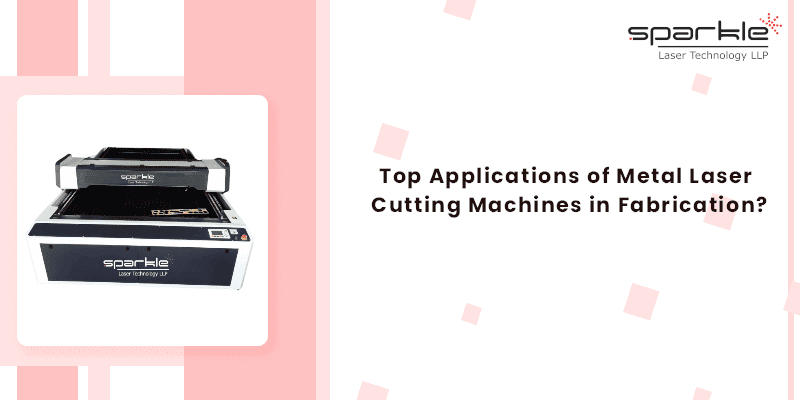
A machine such as the Fiber Laser Cutting Machine, intended for ultra-accurate cutting of metals and their alloys, is suited for the purpose. Thin to medium-thick sheets are cut by this machine, with a smooth edge finish requiring less post-cutting processing.
Automotive Parts & Component Production
Automotive fabrication demands speed, accuracy, and repeatability, and laser cutting checks all these boxes. Inside vehicle manufacturing, parts such as chassis brackets, support plates, trim pieces, and structural connectors must be made with tight tolerances, and this is where laser cutting shines.
Laser cutting also manages well with the various alloys used in modern cars, from mild steels to lighter materials like aluminium. Since automotive design often involves complex shapes that must seamlessly integrate into larger systems, the CNC-driven nature of laser cutting ensures every piece is consistent and ready for assembly.
Aerospace Components Where Precision is Critical
In aerospace fabrication, tolerances can be razor-thin, and safety can hinge on minute manufacturing details. That’s why laser cutting is widely adopted for aircraft parts, structural braces, and complex assemblies. It offers the kind of precision that helps maintain structural integrity while minimising material distortion.
The non-contact cut also reduces heat-affected zones, which preserves the mechanical properties of specialised alloys used in aircraft. In applications where every gram matters and precision can affect performance or safety, lasers provide that reliability.
Electrical & Electronics Fabrication
Laser cutting isn’t just about big industrial steel sheets; it’s also integral to making fine, precise parts for electronics. Metal enclosures, small brackets, contact plates, and mounting components often require tight fits and accurate cutouts for ports, screws, and cable access points. Traditional mechanical cutting can leave burrs or irregular edges that interfere with electrical fittings, but laser cutting gives smooth, accurate edges that reduce the need for hand finishing.
This is especially important in control panels, electrical housings, and precision equipment where millimetre-level accuracy matters for both performance and safety.
Artistic Metalwork & Custom Designs
The laser has stirred quite a sensation in artistic metal fabrication. Consider custom metal signage, grillwork designs, panels, metal artwork, and so on. Regular metal fabrication tools would have a tough time creating fine curves and intricate patterns; the laser beams can simply reproduce digital artwork along required specifications in an instant and without an iota of human error.
The Optimus Cut Laser Cutting Machine is suited for use where the complexity level of the designs is a consideration, such as in artistic metalworking or even jewellery making, among other things. This makes the use of a laser cutter accessible to smaller operations such as workshops, artistic production, and the crafting industry that want world-class production without the steep costs.
Jewellery and Precious Metal Cutting
Though this is a niche market, jewellery manufacturing has greatly benefited from laser cutting. Accuracy is a necessity when it comes to crafting ornate designs in metals like gold, silver, platinum, and other alloys. Laser cutting is precise with none of the risk of warping that other processes pose.
Specialised equipment custom-made for jewellery production improves efficiency. For example, the Jewellery Gold Laser Cutting Machine is designed to cater to small designs for small products such as necklaces, rings, and complex designs, allowing for rapid prototype production by the jewellery maker.
Industrial Component Manufacturing
From custom brackets to machine housings, metal fabrication often includes large runs of industrial components. Laser cutting machines excel in these environments because they combine automation with precision. CNC programming allows operators to upload design files and let the machine handle repetitive or high-volume cutting without constant supervision.
Machines configured for industrial production not only cut quickly but also maintain quality across large batches, which is essential for parts that must fit into larger mechanical systems or assemblies.
Architectural Fabrication and Structural Elements
Architects and designers are now adopting metal components in building structures, facades, decorative screening, and support. The modern processing technology combines the need for structure with that of design, and laser cutting facilitates perfect integration of both.
Complex designs, accurate joints, and reproducible parts enable architects to turn their designs into reality without impacting the speed and accuracy of the production process. Whether it is a functional part or an ornamental surface, the quality delivered by the laser cutting process is impeccable.
Cutting and Marking in Integrated Workflows
An interesting trend in the field of fabrication is the integration of cutting with other laser processes like marking and engraving. For instance, once the cutting of a particular component is complete, the CNC machines can then engrave design details or numbers for identification.
Such efficiency in the work process, in which more than one task is conducted without the need for re-clamping or repositioning of the workpiece, contributes to the saving of time and the prevention of human error. In some fabrication settings, even the process of cleaning or welding is conducted on the same line.
Precision in Rapid Prototyping
Laser cutting is also widely preferred for rapid prototyping of metal parts. The reason is that a CAD system can simply be converted into cut parts. Rapid prototyping with the help of laser cutting is helpful for reducing the product development life cycles. Rapid prototyping with the help of a laser cutter is the best solution for when the functionality tests of the product have not yet been conducted.
Metal laser cutting machines have brought a dramatic change in the way metal fabrication units operate. Be it the cutting part of the job, like cutting the brackets, or the delicate work, such as jewellery, or the large metal parts meant for architectural usage, metal laser cutting machines have added speed, accuracy, and flexibility to every metal fabrication job.
FAQs
1. What kinds of metals can be cut by a laser cutter?
Laser cutting machines, especially those based on fibres, are capable of cutting different metals such as stainless steel, steel, aluminium, copper, and brass with great accuracy. Machines are designed to specifically work with a range of thicknesses of materials and work best with those parameters.
2. Can laser cutting replace traditional cutting methods entirely?
Although laser cutting is highly suited to many applications because it is fast and accurate, some applications involving heavier materials, for instance, plasma cutters or simple saws, continue to employ conventional means. This depends on the material thickness and the amount to be produced.
3. Why do fabrication shops prefer using a laser cutter for metalwork in architecture and artistic applications?
The laser cutting process suits creating detailed, repeatable, and smooth cutouts from a digital design. It functions well when producing architectural panels and metal artwork that demand innovative designs.